

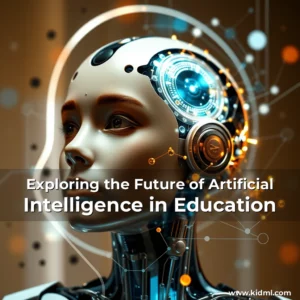
AI agents are revolutionizing the way students interact with digital learning tools, transforming the traditional teacher-student dynamic into a more personalized and engaging experience. At the forefront of this trend is eSelf.ai, a pioneering AI company that specializes in creating highly interactive digital avatars tailored for education.
The Evolution of AI in Education
The rise of AI in education is not just about replacing traditional teaching methods with technology; it’s about creating a more immersive and personalized learning experience. AI agents, with their natural language processing capabilities and human-like personalities, are poised to revolutionize the way students interact with digital learning tools.
- Conversational avatars
- Real-time visuals
- Virtual whiteboards
- Natural voice conversations
These features enable AI agents to engage students in a more natural and intuitive way, creating a sense of comfort and familiarity that is essential for effective learning.
eSelf.ai: The Pioneer of AI Agents
eSelf.ai is at the forefront of this revolution, deploying a large-scale test of its AI agents in Israel this May. The pilot program will engage over 10,000 Israeli students, marking a significant milestone in the widespread adoption of AI-driven tutors. The AI tutors are designed to mimic human tutors, using real-time visuals, virtual whiteboards, and natural voice conversations. This results in a very similar experience to a typical online tutoring session.
“Students text friends but prefer voice for tutoring—it’s more engaging,” says eSelf.ai CEO Alan Bekker.
The AI tutors are also designed with distinct, varied personas, resembling candidates from a casting call for young professional educators. This variety of personas enables educators and students to select avatars that best resonate with their personalities and learning styles, further enhancing student comfort and engagement.
Tavus: The Power of Human-Like Interactions
Tavus, another pioneering AI company, is taking a different approach to AI agents. Its Conversational Video Interface allows real-time interaction between students and digital agents, complete with voice and video capabilities. The interface is designed to facilitate highly realistic human-like behavior in spoken interactions, enabling the AI to observe the user and engage based on what is seen. This means that the AI can recognize emotional cues from students and adjust its responses dynamically, further enhancing the authenticity and depth of interactions.
| Features | Description |
|---|---|
| Real-time interaction | Facilitates highly realistic human-like behavior in spoken interactions |
| Video capabilities | Allows students to look the AI in the eye |
| Dynamic response | Adjusts its responses based on the user’s emotional cues |
Khan Academy’s Khanmigo: A Minimalist Approach
Khan Academy, a well-known education platform, has also developed an AI agent called Khanmigo. Unlike eSelf.ai and Tavus, Khanmigo uses a minimalist geometric figure with expressive eyes, like a friendly cartoon character. The AI agent is designed to be a Socratic guide, steering students toward discovering solutions independently, fostering critical thinking, and deep engagement with the material. Feedback from students has been overwhelmingly positive, with many describing interactions with Khanmigo as akin to working with an actual tutor.
The Uncanny Valley: A Challenge for AI Developers
One challenge presented by systems embracing anthropomorphic agents is the phenomenon commonly called “the uncanny valley,” where near-human likeness causes discomfort. Moderate anthropomorphism, as seen in Khanmigo’s simple design, builds trust without unease. However, being too human-like without making it to the other side of the valley can quickly shift perceptions negatively, undermining the effectiveness of otherwise advanced technological solutions. Thus, AI developers must carefully calibrate the realism of their avatars, balancing the benefits of relatability with the risks of evoking the uncanny valley.
The Future of AI in Education
By 2026, AI agents could be as standard in classrooms as textbooks. By offering features such as visually rich interactions, emotionally intelligent video conversations, and supportive textual dialogues, the tools move AI from disembodied knowledge to embodied personalities that approximate the types of learning interactions characteristic of the best teacher-student interactions. As these tools evolve, developers must remain mindful of the psychological dynamics. Addressing challenges like the uncanny valley will be pivotal in ensuring AI agents become widely accepted and genuinely beneficial tools within education rather than just being the source material for blooper reels and memes.
AI Agents Are The Future Of AI In Education
This is a future where AI is not just a tool, but a companion that supports and motivates students to learn.

news is a contributor at KidML. We are committed to providing well-researched, accurate, and valuable content to our readers.
You May Also Like



About news
Passionate about making AI and machine learning accessible to everyone, especially young learners and beginners.
Related Articles

AI Stocks to Watch: A Closer Look at Duolingo Inc.
Duolingo Inc. (NASDAQ:DUOL) is an educational technology company that has made a name for itself…
Read More →
The 8th China Festival of Education: Fostering Global Conversations on Education
The 8th China Festival of Education, hosted by Wellington College China, brought together over 70…
Read More →
Universities Must Embrace Ai To Bridge The Skills Gap!
The Impact of Generative AI on Education The integration of Generative AI in education has…
Read More →