
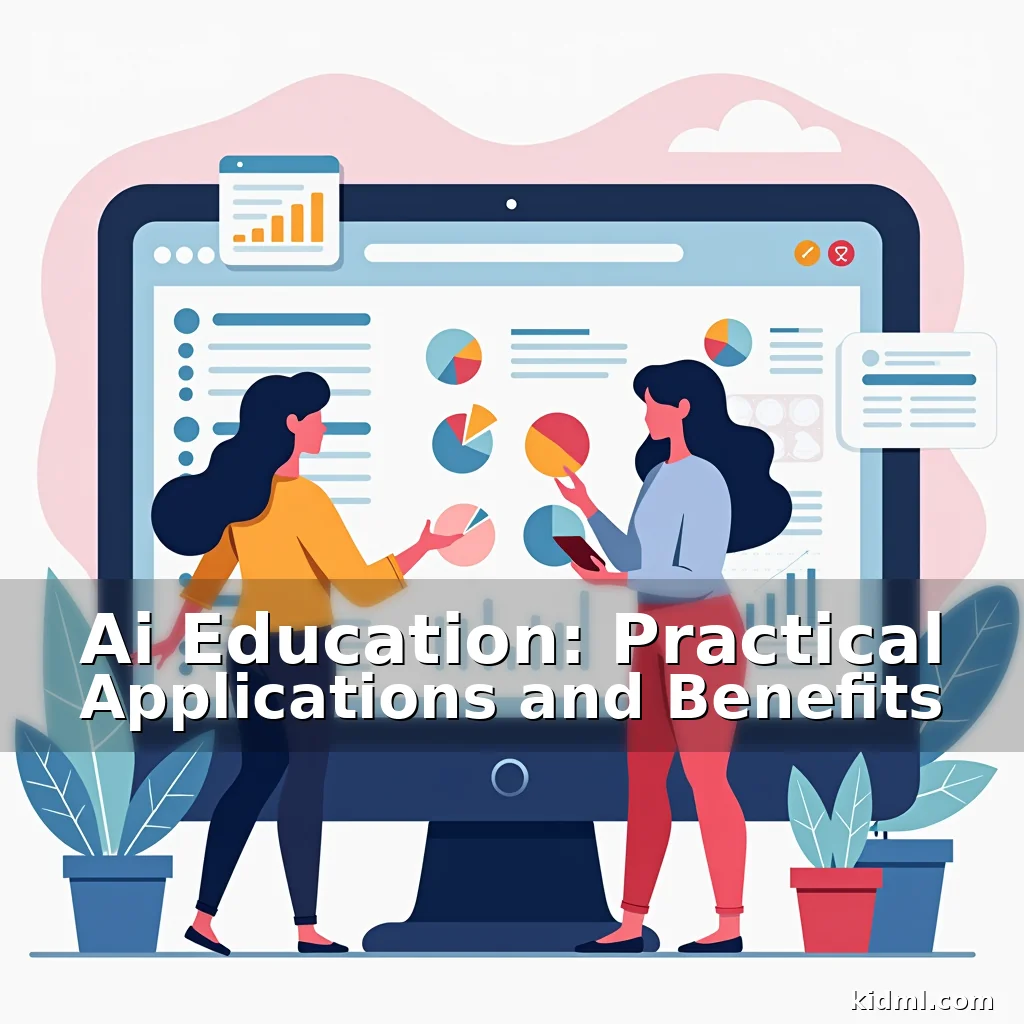
The Future is Now: How Artificial Intelligence Is Transforming Education for Kids
In an era where technology shapes every aspect of life, artificial intelligence (AI) has emerged as a powerful force reshaping how children learn. From personalized learning experiences to interactive educational tools, AI is revolutionizing classrooms around the world.
KidML communities are at the forefront of integrating these innovations, creating dynamic environments that nurture curiosity and critical thinking through intelligent systems designed specifically for young minds.
Understanding AI in Education
Artificial intelligence refers to machines capable of performing tasks typically requiring human intelligence. In education, AI analyzes data patterns to adapt teaching methods uniquely tailored for each student’s needs.
This technology enables educators to identify strengths and weaknesses quickly while providing targeted support. The result? A more efficient learning process that caters precisely to individual requirements.
By leveraging algorithms trained on vast datasets, AI can predict academic performance trends before they become evident through traditional assessment methods.
- Data Analysis: AI processes massive amounts of information from various sources including quizzes, assignments, and classroom interactions to provide deep insights into student progress.
- Adaptive Learning: Intelligent tutoring systems modify lesson difficulty based on real-time feedback ensuring students remain challenged but not overwhelmed.
The Role of AI Tools in Modern Classrooms
Interactive platforms powered by AI have transformed conventional lessons into engaging adventures filled with gamified elements that encourage exploration and discovery among learners.
Tools such as virtual assistants guide students through complex subjects using natural language processing capabilities allowing them to ask questions anytime anywhere.
These digital companions don’t merely answer queries; they understand context enabling meaningful conversations that deepen understanding rather than just memorization.
Popular Educational Platforms Powered by AI
Sophia, an advanced chatbot developed by Hanson Robotics, serves as both tutor and mentor helping kids grasp abstract mathematical concepts through visual demonstrations.
Google’s Read Along app uses speech recognition technology to help early readers develop fluency by analyzing pronunciation accuracy and offering instant corrections.
Duolingo employs machine learning models that adjust vocabulary difficulty levels dynamically ensuring users stay engaged without feeling frustrated by overly challenging material.
Fostering Creativity Through AI Integration
Beyond rote learning, AI encourages creative problem-solving skills essential for future careers. Interactive coding games teach logical reasoning through trial-and-error scenarios presented visually appealingly.
Students collaborate virtually across continents working together on projects facilitated by AI-driven project management software which tracks contributions objectively eliminating bias during evaluations.
Such collaborative efforts prepare youth for global teamwork environments emphasizing communication clarity and innovation mindset development simultaneously.
Personalized Learning Experiences Enabled By AI
Each child learns differently yet current educational frameworks often follow rigid structures limiting potential growth opportunities for diverse learners.
With AI integration, customized curricula emerge reflecting personal interests enhancing motivation levels significantly compared to standardized approaches.
For instance, a student passionate about dinosaurs might explore history alongside science topics seamlessly integrated via AI-curated resources available instantly online.
- Cognitive Assessment: Initial assessments determine baseline knowledge levels guiding creation of bespoke learning paths aligned perfectly with individual abilities.
- Pacing Control: Learners dictate their own speed progressing faster when confident slowing down whenever necessary maintaining optimal comprehension rates consistently.
Ethical Considerations Surrounding AI Usage In Schools
As schools adopt AI technologies extensively, ethical dilemmas arise concerning privacy protections especially regarding minors whose sensitive data gets collected frequently during daily activities.
Parents must be informed transparently about what kind of information is being gathered why it matters and most importantly how securely stored against unauthorized access attempts.
Regulatory bodies worldwide are developing guidelines aiming to balance technological advancements with safeguarding fundamental rights ensuring equitable treatment regardless of socioeconomic backgrounds.
Preparing Teachers For An AI-Driven Classroom Environment
Successful implementation hinges largely upon educator preparedness. Professional development programs equip teachers with requisite technical know-how empowering them confidently navigate new digital landscapes.
Ongoing training sessions cover everything from basic operation manuals up to advanced analytics interpretation techniques fostering continuous improvement cycles benefiting entire school ecosystems positively.
Moreover, teacher-AI collaboration becomes crucial wherein professionals act as facilitators interpreting algorithmic suggestions translating them effectively into practical pedagogical strategies applicable within real-world settings.
Measuring Effectiveness Of AI Implementations In Education
Assessments go beyond mere test scores focusing instead on holistic indicators measuring engagement metrics participation frequency cognitive load variations etc.
Real-time dashboards display live updates showing areas needing attention prompting timely interventions preventing skill gaps formation early stages.
Longitudinal studies track developmental trajectories comparing cohorts exposed versus those untouched revealing statistical significance validating efficacy claims made initially.
Future Trends Shaping AI Education Landscape
Rapid advancement continues pushing boundaries opening exciting possibilities soon to materialize affecting millions globally. Emerging fields like quantum computing promise unprecedented breakthroughs transforming existing paradigms entirely.
Immersive realities combining VR/AR interfaces will allow hands-on experimentation safely simulating dangerous procedures commonly encountered in STEM disciplines reducing risks dramatically increasing accessibility broadly.
Blockchain technology offers secure decentralized recordkeeping solutions guaranteeing verifiable credentials accessible universally transcending geographical limitations previously hindering quality education dissemination equitably.
Conclusion
Artificial intelligence presents immense opportunities redefining educational paradigms fundamentally altering how generations acquire knowledge interactively collaboratively innovatively.
To harness full benefits responsibly requires collective commitment embracing change proactively cultivating safe inclusive spaces prioritizing ethics above all else nurturing tomorrow’s leaders today.

news is a contributor at KidML. We are committed to providing well-researched, accurate, and valuable content to our readers.
You May Also Like


About news
Passionate about making AI and machine learning accessible to everyone, especially young learners and beginners.
Related Articles

The New 2nd Amendment The Right To Bear AI : 35 Of Employees Pack Their Own
However, if the work is not digitized, generative AI can be a game-changer for those…
Read More →
CityU to roll out HK first AI in business master program
The program will be offered in collaboration with the University of California, Berkeley, and will…
Read More →
Unlocking Tomorrow’s Minds: A Journey Through AI Education for Kids and Beyond
Unlocking Tomorrow’s Minds: A Journey Through AI Education for Kids and Beyond In today’s rapidly…
Read More →