
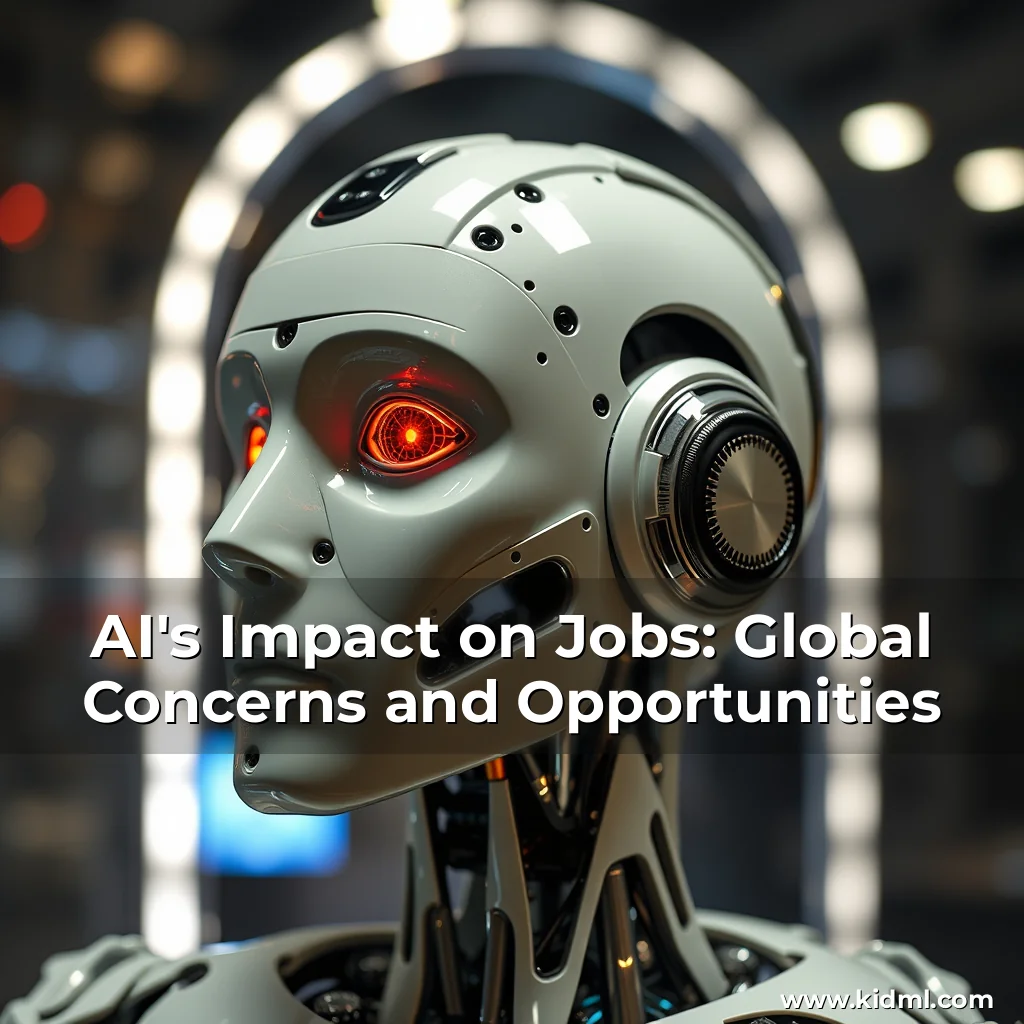
The world is bracing itself for the effects of Artificial Intelligence (AI) on jobs, with a UN report suggesting that up to 40% of globally employed individuals could be impacted by automation. In advanced economies, this translates to a significant proportion of jobs being at risk of being carried out by machines, leaving workers in a precarious situation. The market for AI is anticipated to skyrocket in the coming years, with a projected value of $4.8 trillion by 2033, a 25-fold increase from 2023’s $189 billion. This surge in demand has led to a significant increase in AI-related research and development, with 100 companies in 2022 accounting for 40% of global efforts in this field. However, the potential benefits of AI, if realized, could lead to significant job displacement. Shopify CEO Tobi Lutke recently made headlines by stating that employees would need to demonstrate that jobs cannot be automated before asking for more resources or headcount. Despite the challenges, AI can also bring about numerous benefits to advanced economies, particularly in boosting productivity and complementing human skills. An estimated 27% of jobs in these economies could be improved by leveraging AI technologies. The report also highlights the need for developing countries to rethink their industrial policies and focus on technology, innovation, and knowledge-intensive services. Developing countries are lagging behind in terms of national AI strategies, with only 30% having implemented such plans. A major obstacle to the adoption of AI in developing countries is the lack of infrastructure and resources. The report emphasizes the need for governments to upgrade their infrastructure to ensure equitable access to electricity, the internet, and computing power. Additionally, building AI literacy across the population is crucial, with efforts to integrate STEM and AI into education being essential. Furthermore, the report stresses the importance of global cooperation and governance to ensure that AI serves the public good. The current governance structure is fragmented, dominated by a few wealthy nations, and lacks representation from the majority of developing countries.
Key Statistics:
- Up to 40% of globally employed individuals could be impacted by automation (UN report)
- $4.8 trillion: Projected value of the AI market by 2033
- 100 companies: Accounted for 40% of global AI research and development in 2022
- 60%: Proportion of AI patents held by the US and China
- 27%: Estimated proportion of jobs in advanced economies that could be improved by leveraging AI technologies
| Developing Countries | Number of AI Patents | Number of AI Publications | Proportion of AI Research and Development |
|---|---|---|---|
| China | 60% | 27% | 10% |
| United States | 40% | 20% | 15% |
| India | 5% | 5% | 5% |
| Other Developing Countries | 35% | 48% | 65% |
UN report
In 2022, the UN Department of Trade and Development (UNCTAD) released a report that highlights the significant impact of AI on jobs globally. The report emphasizes the need for a coordinated approach to addressing the challenges and opportunities presented by AI. The report also underscores the importance of developing countries in adopting AI technologies to boost productivity and complement human skills. However, the lack of infrastructure and resources in these countries hinders their ability to realize the benefits of AI. The report calls for a more inclusive global collaboration to ensure that AI serves the public good. The current governance structure is dominated by a few wealthy nations, and the lack of representation from developing countries is a concern. In conclusion, the impact of AI on jobs is a pressing issue that requires a nuanced approach. While the benefits of AI can be significant, the challenges posed by automation and job displacement must be addressed to ensure that workers are equipped to thrive in an AI-driven world.

news is a contributor at KidML. We are committed to providing well-researched, accurate, and valuable content to our readers.
You May Also Like



About news
Passionate about making AI and machine learning accessible to everyone, especially young learners and beginners.
Related Articles

AI Regulations : Virginia AI Act Targets High Risk AI Systems
The bill aims to address the growing concern of AI safety and security by creating…
Read More →
A New Era In Testing : Tps Partners With Stanford , Silicon Valley For Ai , Emerging Tech Course Development!
The course was designed to introduce students to the latest advancements in artificial intelligence and…
Read More →
Hale Education and Inspirit AI will host two summer intensive boot camps in Dubai June and August
The Partnership and Benefits The partnership between Hale Education Group and Inspirit AI is a…
Read More →