
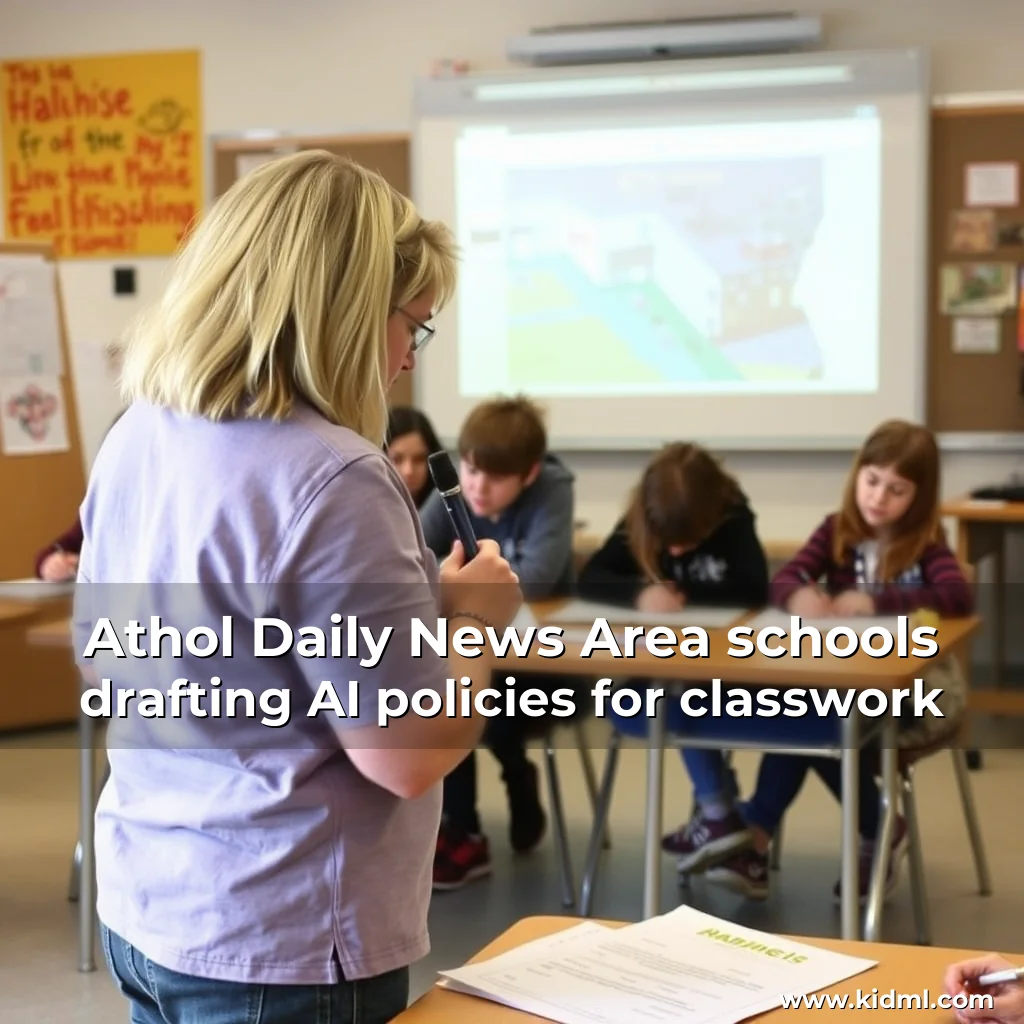
Balancing Innovation with Concerns
The introduction of new policies governing the use of artificial intelligence (AI) in classrooms is a response to growing concerns over its impact on students, teachers, and the education system as a whole.
Rather than prohibiting AI usage, the policy aims to educate students and staff on how to use AI responsibly and effectively. The draft policy emphasizes the importance of understanding AI’s limitations and potential biases. It encourages students to think critically about the information they consume, especially from online sources, and to verify information through multiple sources whenever possible. By doing so, they can develop a deeper understanding of the world and its complexities, as well as foster critical thinking skills. Moreover, the policy promotes the use of AI as a learning tool, rather than relying solely on it. This approach enables students to leverage AI’s capabilities while developing essential skills in critical thinking, problem-solving, and creativity. To address concerns about AI-generated content being passed off as student work, the policy includes guidelines for teachers and staff on how to assess student work. It suggests using a combination of human judgment and AI-powered tools to evaluate student assignments.
AI in Education: A New Frontier
The integration of Artificial Intelligence (AI) in education has been a topic of discussion for several years, with many institutions exploring its potential to enhance teaching and learning.
We’re seeing a lot of interest in AI from teachers and administrators, and we’re working to develop a framework for how we can use AI in a way that supports student learning and doesn’t disrupt the teacher-student relationship.
The Rise of AI in Education
The integration of Artificial Intelligence (AI) in education is a topic of growing interest and concern among educators, policymakers, and the general public. As AI technology advances, its potential applications in the classroom are becoming increasingly evident, sparking debates about its benefits and drawbacks.
While AI has the potential to revolutionize education, it is essential to consider the potential risks and challenges associated with its integration. Some concerns include:
Addressing Concerns and Developing a Framework
To mitigate these concerns and ensure the effective integration of AI in education, it is crucial to develop a framework that prioritizes student learning and teacher well-being.
The Rise of AI-Generated Content
The increasing prevalence of artificial intelligence (AI) in educational settings has raised concerns about the authenticity of student work. As AI-generated content becomes more sophisticated, it can be challenging to distinguish between human-created and AI-generated work. This has led to a growing need for schools to develop policies and guidelines on AI plagiarism.
The Importance of Developing Policies
School districts should consider developing policies on AI plagiarism to address the growing concern. These policies should outline the types of AI-generated content that are acceptable and those that are not.
The Importance of Teaching AI Effectiveness
Effective use of Artificial Intelligence (AI) is crucial in today’s digital landscape. As AI becomes increasingly integrated into various aspects of life, it is essential to teach students how to use it effectively.
The National Association of School Administrators of Massachusetts (NASAM) is a professional organization that represents local school committees, superintendents and other school administrators. NASAM is a member of the National Association of School Boards of Education (NASBE).

news is a contributor at KidML. We are committed to providing well-researched, accurate, and valuable content to our readers.
You May Also Like


About news
Passionate about making AI and machine learning accessible to everyone, especially young learners and beginners.
Related Articles

LSU Law professors release The Law Prof AI Sandbox to help colleagues explore enhance artificial intelligence in the classroom
Law students get hands-on experience with AI in the classroom with innovative online resource. Monroe…
Read More →
Class Is in Session: How some law schools are training students in generative AI
Legal Education As law schools continue to adapt to the rapidly evolving landscape of artificial…
Read More →
Invasion of privacy : Youths more distrustful of AI data systems B C study finds
Understanding the Perceived Risks and Benefits of Artificial Intelligence The study aimed to explore how…
Read More →