
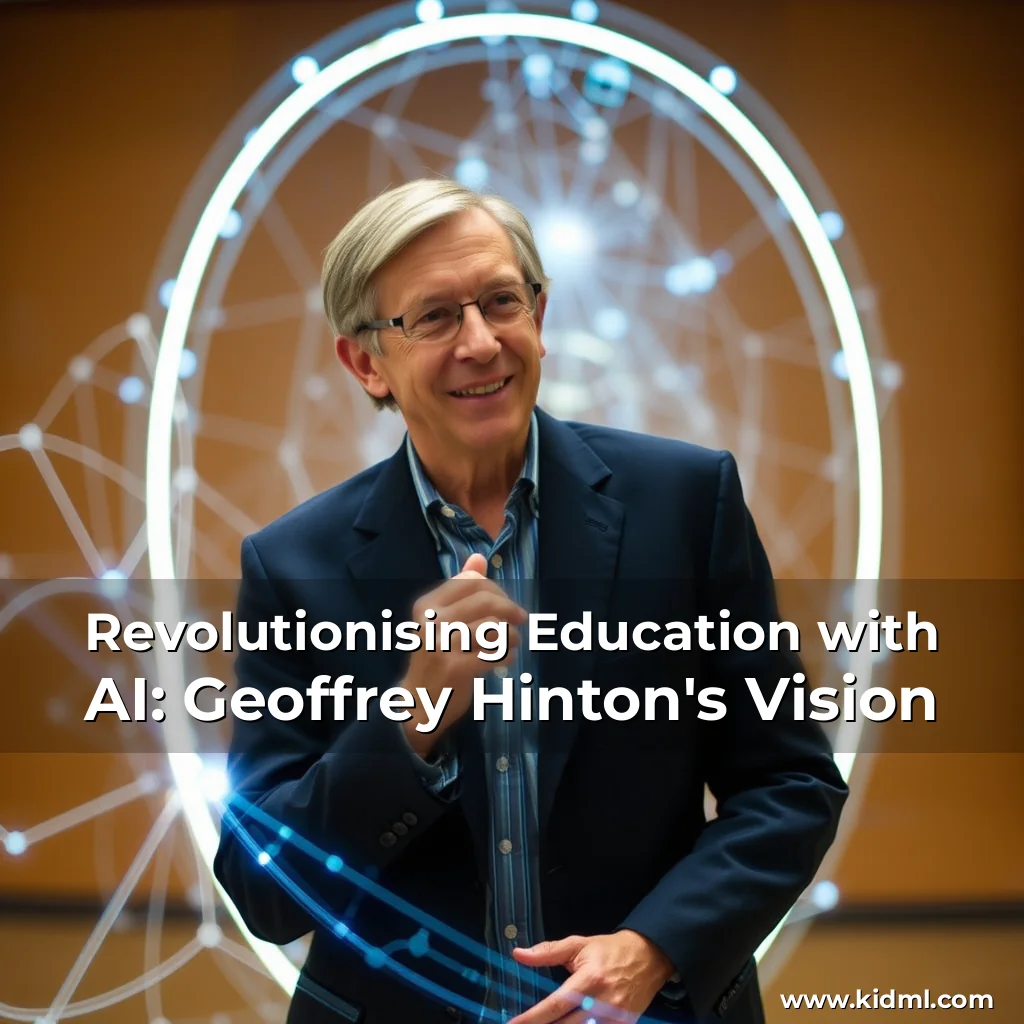
AI-powered private tutors are set to revolutionise the education sector, with potential benefits that could significantly outperform human educators. The AI tutors, which Hinton believes will be three to four times better, will offer highly customised lessons by pinpointing and addressing individual misunderstandings in learners.
- Customised learning experiences tailored to each learner’s needs and abilities
- Enhanced student outcomes through targeted support and correction
- Increased accessibility to quality education for a broader audience
The significance of this development cannot be overstated. If undergraduate education, particularly in technical fields, becomes obsolete within a decade, it poses a substantial threat to universities, which have traditionally been the mainstay for technical education. However, Hinton’s views on this matter highlight the potential benefits for learners, suggesting a future where knowledge acquisition becomes more accessible to a wider audience.
| Customised learning experiences | Enhanced student outcomes | Increased accessibility |
The Nobel laureate also acknowledged the importance of research in universities, stating that it requires an environment of mentorship and original inquiry, which traditional institutions provide uniquely. Hinton’s work on neural networks has contributed significantly to the advancement of AI, and his advocacy for responsible innovation highlights the need for caution in AI development. “AI must be developed and used responsibly,” Hinton said. “We need to ensure that it’s used to benefit society, not just to improve efficiency.”
As AI takes over routine learning, the focus for aspiring computer science students may shift towards creativity and interdisciplinary problem-solving rather than rote learning. Hinton’s remarks suggest that students may need to re-evaluate the value they place on university education. “They may well be, yes,” Hinton said when asked if computer science programmes could be in jeopardy. This implies that the advent of AI in education is not just about efficiency but about fostering a radical reinvention of learning itself. The AI revolution is indeed redefining how, why, and where people learn. It is not merely changing the future of work but also how knowledge is imparted. This evolution in learning methods prompts a shift in educational focus from traditional rote methods to more innovative and creative problem-solving approaches. In a statement, Hinton said,
“It may not be good news for universities, but it’s very good news for people learning stuff.”
This suggests a future where knowledge acquisition could become more accessible to a broader audience.
The Democratization of Learning
The democratization of learning is a significant aspect of this revolution. AI-powered private tutors will enable individuals to acquire knowledge at their own pace, without the constraints of a traditional classroom environment.
- Flexibility and autonomy in learning
- Personalized learning experiences
- Accessibility to quality education for a broader audience
This shift in learning methods will require universities and educational institutions to adapt to this new reality or risk becoming obsolete. The future of education is uncertain, but one thing is clear: the advent of AI is redefining how we learn. As Hinton’s influential insights continue to resonate, it becomes increasingly clear that the AI revolution in education is not just about efficiency but about fostering a radical reinvention of learning itself. The future of education is being rewritten, and it is essential that educational institutions are prepared for this change.
Challenges Ahead
The challenges ahead for universities and educational institutions are significant. As AI-powered private tutors become increasingly prevalent, universities may need to re-evaluate their role in education.
- Adapting to a new reality
- Embracing innovation and creativity
- Ensuring the continued value of research
However, Hinton’s advocacy for responsible innovation and caution in AI development highlights the importance of prioritizing safety and ethics in this revolution. “AI must be developed and used responsibly,” Hinton said. “We need to ensure that it’s used to benefit society, not just to improve efficiency.”
As the AI revolution continues to evolve, it is essential that educational institutions remain committed to providing a high-quality education that prepares students for the challenges of the future.
The Future of Education
The future of education is uncertain, but one thing is clear: the advent of AI is redefining how we learn. As Hinton’s insights continue to shape the conversation, it becomes increasingly clear that the AI revolution in education is not just about efficiency but about fostering a radical reinvention of learning itself. In a world where AI-powered private tutors are becoming increasingly prevalent, the focus for aspiring computer science students may shift towards creativity and interdisciplinary problem-solving rather than rote learning. In conclusion, the advent of AI in education is a significant development that has the potential to revolutionize the way we learn.

news is a contributor at KidML. We are committed to providing well-researched, accurate, and valuable content to our readers.
You May Also Like


About news
Passionate about making AI and machine learning accessible to everyone, especially young learners and beginners.
Related Articles

The Future of Learning: Our Digital Strategy
We are committed to harnessing the power of technology to enhance learning in a way…
Read More →
New Jersey: The Gateway to AI Innovation on the East Coast
By BF Editors New Jersey has long been a magnet for technology companies, thanks to…
Read More →
Meet the Educational Entrepreneurs Who Want to Teach a New Generation of Elon Musks Mother Jones
The Department of Education’s Radical Transformation The Department of Education has undergone a significant transformation,…
Read More →