
Table of Contents
Navigate through this article's sections
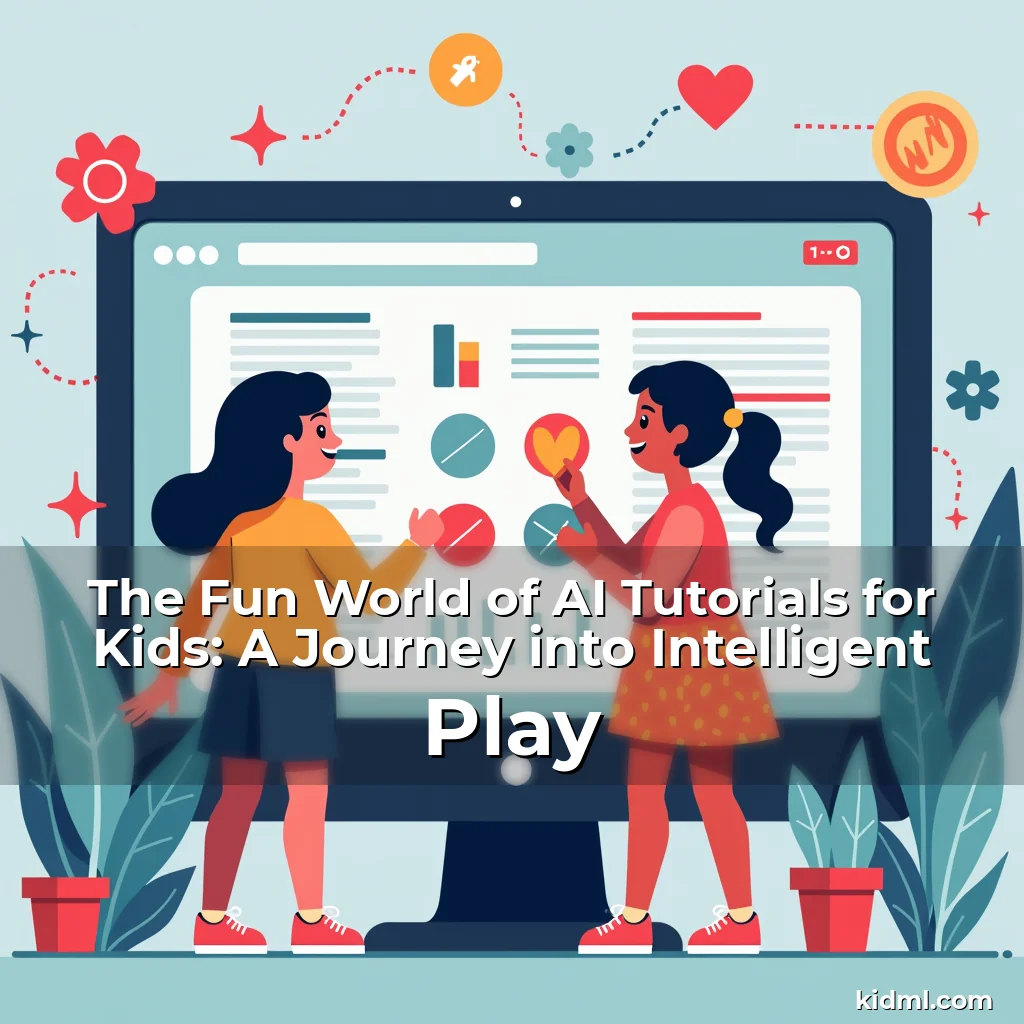
The Fun World of AI Tutorials for Kids: A Journey into Intelligent Play
Welcome to an exciting new era where learning artificial intelligence is not only possible but also incredibly fun for children! This article explores how AI tutorials tailored specifically for young minds are transforming education by making complex technology accessible through play.
In today’s digital age, preparing our children for future careers involves more than just coding skills—it requires understanding intelligent systems that shape our world every day. These specialized tutorials offer a perfect blend of creativity and logic, helping kids grasp fundamental concepts without feeling overwhelmed.
Why AI Tutorials Are Perfect for Young Learners
Kids naturally gravitate towards interactive experiences that spark their curiosity. AI tutorials designed for them leverage this innate desire by incorporating games, puzzles, and visual storytelling methods that make abstract ideas tangible and enjoyable.
These programs often use simple drag-and-drop interfaces which allow even very young learners to experiment with algorithms and data patterns intuitively. The immediate feedback they receive helps reinforce learning while keeping frustration at bay.
- Game-based Learning: Transforming complex topics into challenges that feel like play rather than homework
- Visual Representation: Using colorful animations to demonstrate how machines learn from examples
- Immediate Feedback: Providing instant results so students understand what works and what needs improvement
A key advantage lies in how these tutorials adapt to different skill levels. Whether a child is just starting out or has already mastered basic programming concepts, there’s always something new to discover within the ever-evolving field of artificial intelligence.
Fostering Creativity Through Interactive Projects
Creativity thrives when given freedom to explore. Many AI tutorial platforms encourage students to build their own projects using pre-designed modules that guide them step-by-step through various applications of machine learning.
For instance, some tools let kids train virtual assistants to recognize voices or teach robots to navigate mazes—all while explaining underlying principles such as pattern recognition and decision-making processes in plain language.
Real-Life Applications Made Simple
By connecting classroom activities with real-world scenarios, these tutorials help bridge theoretical knowledge with practical understanding. One study found that students who engaged regularly with AI projects showed improved problem-solving abilities compared to those following traditional curricula alone.
This hands-on approach makes learning relevant; instead of memorizing facts, children apply concepts creatively. They might design chatbots for school events or create art generators that respond to music inputs—each project reinforcing core AI principles organically.
Selecting the Right AI Tutorial Platform
With numerous options available online, choosing the best platform depends largely on your child’s interests and current skill level. Look for resources that combine educational value with engaging formats suitable for young users.
Safety features are crucial too. Ensure any chosen tool adheres strictly to privacy policies protecting minors’ personal information. Reputable providers usually have clear guidelines regarding data usage and parental controls.
Interactive elements should be balanced with structured lessons to maintain academic rigor alongside entertainment value. Platforms offering progress tracking can give parents insight into their child’s development path over time.
Consider whether offline access matters—some premium services require constant internet connectivity whereas others provide downloadable materials ideal for travel or limited bandwidth situations.
Bridging the Gap Between Education and Future Careers
Introducing AI concepts early lays a strong foundation for potential career paths in tech fields later on. Exposure during formative years helps demystify what might otherwise seem intimidating or inaccessible subjects.
Educators increasingly recognize the importance of integrating STEM (Science, Technology, Engineering & Math) topics from an early stage. AI tutorials serve as excellent entry points since they’re inherently interdisciplinary nature spans across multiple domains simultaneously.
Developing critical thinking skills becomes second nature when working with adaptive technologies. Students learn perseverance through trial-and-error experimentation—a mindset highly valued among professionals regardless of industry sector.
Moreover, collaborative projects foster teamwork competencies essential nowadays—not just technical expertise alone determines success anymore. Working together on shared goals teaches communication strategies vital both personally and professionally.
Encouraging Independent Exploration
While guided instruction remains important initially, encouraging self-directed discovery promotes deeper engagement eventually. Provide opportunities where children can follow up on questions independently after completing foundational coursework.
Some platforms include challenge modes or advanced tracks catering specifically toward motivated learners seeking additional depth beyond standard curriculum expectations. These extensions reward initiative with increased complexity matched appropriately against individual capabilities.
Supportive environments matter greatly here—celebrating small victories keeps motivation high. Parents playing active roles by participating occasionally reinforces familial bonds while showing genuine interest in technological advancements shaping tomorrow’s world.
Keeping pace with evolving trends ensures continued relevance; periodically revisiting course material allows updating knowledge base accordingly as new breakthroughs emerge frequently within rapidly advancing AI landscapes.
Building Confidence Through Success Stories
Hearing about peers achieving remarkable feats inspires determination. Sharing stories of other young inventors who’ve created impactful solutions using similar methodologies builds belief that anyone can contribute meaningfully despite age limitations.
Many organizations host competitions explicitly aimed at youth participants showcasing innovative uses of AI techniques applied practically yet imaginatively. Winning prizes isn’t necessarily goal though—participation itself offers tremendous growth opportunities regardless of outcome.
Documenting progress visually aids comprehension significantly. Creating portfolios displaying completed work demonstrates visible evidence proving capability progression over extended periods effectively communicating achievements clearly.
Positive reinforcement plays pivotal role maintaining enthusiasm long-term especially considering how quickly attention spans change dynamically amongst developing brains requiring frequent stimuli changes strategically planned ahead.
Creating Lasting Educational Experiences
Designing memorable learning journeys requires thoughtful planning ensuring each experience contributes positively towards overall cognitive development trajectories uniquely aligned with personal aspirations.
Customization possibilities enhance effectiveness considerably allowing tailoring approaches precisely matching distinct personality traits maximizing enjoyment derived from studying challenging material successfully.
Maintaining balance between structured guidance and exploratory freedoms prevents burnout promoting sustained involvement consistently throughout prolonged educational endeavors pursued enthusiastically without pressure.
Engaging communities around common interests fosters peer support networks beneficially strengthening social connections concurrently enhancing academic pursuits mutually enriching everyone involved collaboratively.
Conclusion
This exploration highlights how AI tutorials crafted thoughtfully cater specifically toward youthful audiences turning potentially daunting subjects into delightful adventures filled with endless possibilities waiting patiently to be discovered.
Embrace this opportunity wholeheartedly nurturing budding talents capable of reshaping tomorrow’s technological landscape confidently equipped with necessary tools empowering innovation now and forevermore.
“`
“`html
The Fun World of AI Tutorials for Kids: A Journey into Intelligent Play
Welcome to an exciting new era where learning artificial intelligence is not only possible but also incredibly fun for children! This article explores how AI tutorials tailored specifically for young minds are transforming education by making complex technology accessible through play.
In today’s digital age, preparing our children for future careers involves more than just coding skills—it requires understanding intelligent systems that shape our world every day. These specialized tutorials offer a perfect blend of creativity and logic, helping kids grasp fundamental concepts without feeling overwhelmed.
Why AI Tutorials Are Perfect for Young Learners
Kids naturally gravitate towards interactive experiences that spark their curiosity. AI tutorials designed for them leverage this innate desire by incorporating games, puzzles, and visual storytelling methods that make abstract ideas tangible and enjoyable.
These programs often use simple drag-and-drop interfaces which allow even very young learners to experiment with algorithms and data patterns intuitively. The immediate feedback they receive helps reinforce learning while keeping frustration at bay.
- Game-based Learning: Transforming complex topics into challenges that feel like play rather than homework
- Visual Representation: Using colorful animations to demonstrate how machines learn from examples
- Immediate Feedback: Providing instant results so students understand what works and what needs improvement
A key advantage lies in how these tutorials adapt to different skill levels. Whether a child is just starting out or has already mastered basic programming concepts, there’s always something new to discover within the ever-evolving field of artificial intelligence.
Fostering Creativity Through Interactive Projects
Creativity thrives when given freedom to explore. Many AI tutorial platforms encourage students to build their own projects using pre-designed modules that guide them step-by-step through various applications of machine learning.
For instance, some tools let kids train virtual assistants to recognize voices or teach robots to navigate mazes—all while explaining underlying principles such as pattern recognition and decision-making processes in plain language.
Real-Life Applications Made Simple
By connecting classroom activities with real-world scenarios, these tutorials help bridge theoretical knowledge with practical understanding. One study found that students who engaged regularly with AI projects showed improved problem-solving abilities compared to those following traditional curricula alone.
This hands-on approach makes learning relevant; instead of memorizing facts, children apply concepts creatively. They might design chatbots for school events or create art generators that respond to music inputs—each project reinforcing core AI principles organically.
Selecting the Right AI Tutorial Platform
With numerous options available online, choosing the best platform depends largely on your child’s interests and current skill level. Look for resources that combine educational value with engaging formats suitable for young users.
Safety features are crucial too. Ensure any chosen tool adheres strictly to privacy policies protecting minors’ personal information. Reputable providers usually have clear guidelines regarding data usage and parental controls.
Interactive elements should be balanced with structured lessons to maintain academic rigor alongside entertainment value. Platforms offering progress tracking can give parents insight into their child’s development path over time.
Consider whether offline access matters—some premium services require constant internet connectivity whereas others provide downloadable materials ideal for travel or limited bandwidth situations.
Bridging the Gap Between Education and Future Careers
Introducing AI concepts early lays a strong foundation for potential career paths in tech fields later on. Exposure during formative years helps demystify what might otherwise seem intimidating or inaccessible subjects.
Educators increasingly recognize the importance of integrating STEM (Science, Technology, Engineering & Math) topics from an early stage. AI tutorials serve as excellent entry points since they’re inherently interdisciplinary nature spans across multiple domains simultaneously.
Developing critical thinking skills becomes second nature when working with adaptive technologies. Students learn perseverance through trial-and-error experimentation—a mindset highly valued among professionals regardless of industry sector.
Moreover, collaborative projects foster teamwork competencies essential nowadays—not just technical expertise alone determines success anymore. Working together on shared goals teaches communication strategies vital both personally and professionally.
Encouraging Independent Exploration
While guided instruction remains important initially, encouraging self-directed discovery promotes deeper engagement eventually. Provide opportunities where children can follow up on questions independently after completing foundational coursework.
Some platforms include challenge modes or advanced tracks catering specifically toward motivated learners seeking additional depth beyond standard curriculum expectations. These extensions reward initiative with increased complexity matched appropriately against individual capabilities.
Supportive environments matter greatly here—celebrating small victories keeps motivation high. Parents playing active roles by participating occasionally reinforces familial bonds while showing genuine interest in technological advancements shaping tomorrow’s world.
Keeping pace with evolving trends ensures continued relevance; periodically revisiting course material allows updating knowledge base accordingly as new breakthroughs emerge frequently within rapidly advancing AI landscapes.
Building Confidence Through Success Stories
Hearing about peers achieving remarkable feats inspires determination. Sharing stories of other young inventors who’ve created impactful solutions using similar methodologies builds belief that anyone can contribute meaningfully despite age limitations.
Many organizations host competitions explicitly aimed at youth participants showcasing innovative uses of AI techniques applied practically yet imaginatively. Winning prizes isn’t necessarily goal though—participation itself offers tremendous growth opportunities regardless of outcome.
Documenting progress visually aids comprehension significantly. Creating portfolios displaying completed work demonstrates visible evidence proving capability progression over extended periods effectively communicating achievements clearly.
Positive reinforcement plays pivotal role maintaining enthusiasm long-term especially considering how quickly attention spans change dynamically amongst developing brains requiring frequent stimuli changes strategically planned ahead.
Creating Lasting Educational Experiences
Designing memorable learning journeys requires thoughtful planning ensuring each experience contributes positively towards overall cognitive development trajectories uniquely aligned with personal aspirations.
Customization possibilities enhance effectiveness considerably allowing tailoring approaches precisely matching distinct personality traits maximizing enjoyment derived from studying challenging material successfully.
Maintaining balance between structured guidance and exploratory freedoms prevents burnout promoting sustained involvement consistently throughout prolonged educational endeavors pursued enthusiastically without pressure.
Engaging communities around common interests fosters peer support networks beneficially strengthening social connections concurrently enhancing academic pursuits mutually enriching everyone involved collaboratively.
Conclusion
This exploration highlights how AI tutorials crafted thoughtfully cater specifically toward youthful audiences turning potentially daunting subjects into delightful adventures filled with endless possibilities waiting patiently to be discovered.
Embrace this opportunity wholeheartedly nurturing budding talents capable of reshaping tomorrow’s technological landscape confidently equipped with necessary tools empowering innovation now and forevermore.
“`
“`html
The Fun World of AI Tutorials for Kids: A Journey into Intelligent Play
Welcome to an exciting new era where learning artificial intelligence is not only possible but also incredibly fun for children! This article explores how AI tutorials tailored specifically for young minds are transforming education by making complex technology accessible through play.
In today’s digital age, preparing our children for future careers involves more than just coding skills—it requires understanding intelligent systems that shape our world every day. These specialized tutorials offer a perfect blend of creativity and logic, helping kids grasp fundamental concepts without feeling overwhelmed.
Why AI Tutorials Are Perfect for Young Learners
Kids naturally gravitate towards interactive experiences that spark their curiosity. AI tutorials designed for them leverage this innate desire by incorporating games, puzzles, and visual storytelling methods that make abstract ideas tangible and enjoyable.
These programs often use simple drag-and-drop interfaces which allow even very young learners to experiment with algorithms and data patterns intuitively. The immediate feedback they receive helps reinforce learning while keeping frustration at bay.
- Game-based Learning: Transforming complex topics into challenges that feel like play rather than homework
- Visual Representation: Using colorful animations to demonstrate how machines learn from examples
- Immediate Feedback: Providing instant results so students understand what works and what needs improvement
A key advantage lies in how these tutorials adapt to different skill levels. Whether a child is just starting out or has already mastered basic programming concepts, there’s always something new to discover within the ever-evolving field of artificial intelligence.
Fostering Creativity Through Interactive Projects
Creativity thrives when given freedom to explore. Many AI tutorial platforms encourage students to build their own projects using pre-designed modules that guide them step-by-step through various applications of machine learning.
For instance, some tools let kids train virtual assistants to recognize voices or teach robots to navigate mazes—all while explaining underlying principles such as pattern recognition and decision-making processes in plain language.
Real-Life Applications Made Simple
By connecting classroom activities with real-world scenarios, these tutorials help bridge theoretical knowledge with practical understanding. One study found that students who engaged regularly with AI projects showed improved problem-solving abilities compared to those following traditional curricula alone.
This hands-on approach makes learning relevant; instead of memorizing facts, children apply concepts creatively. They might design chatbots for school events or create art generators that respond to music inputs—each project reinforcing core AI principles organically.
Selecting the Right AI Tutorial Platform
With numerous options available online, choosing the best platform depends largely on your child’s interests and current skill level. Look for resources that combine educational value with engaging formats suitable for young users.
Safety features are crucial too. Ensure any chosen tool adheres strictly to privacy policies protecting minors’ personal information. Reputable providers usually have clear guidelines regarding data usage and parental controls.
Interactive elements should be balanced with structured lessons to maintain academic rigor alongside entertainment value. Platforms offering progress tracking can give parents insight into their child’s development path over time.
Consider whether offline access matters—some premium services require constant internet connectivity whereas others provide downloadable materials ideal for travel or limited bandwidth situations.
Bridging the Gap Between Education and Future Careers
Introducing AI concepts early lays a strong foundation for potential career paths in tech fields later on. Exposure during formative years helps demystify what might otherwise seem intimidating or inaccessible subjects.
Educators increasingly recognize the importance of integrating STEM (Science, Technology, Engineering & Math) topics from an early stage. AI tutorials serve as excellent entry points since they’re inherently interdisciplinary nature spans across multiple domains simultaneously.
Developing critical thinking skills becomes second nature when working with adaptive technologies. Students learn perseverance through trial-and-error experimentation—a mindset highly valued among professionals regardless of industry sector.
Moreover, collaborative projects foster teamwork competencies essential nowadays—not just technical expertise alone determines success anymore. Working together on shared goals teaches communication strategies vital both personally and professionally.
Encouraging Independent Exploration
While guided instruction remains important initially, encouraging self-directed discovery promotes deeper engagement eventually. Provide opportunities where children can follow up on questions independently after completing foundational coursework.
Some platforms include challenge modes or advanced tracks catering specifically toward motivated learners seeking additional depth beyond standard curriculum expectations. These extensions reward initiative with increased complexity matched appropriately against individual capabilities.
Supportive environments matter greatly here—celebrating small victories keeps motivation high. Parents playing active roles by participating occasionally reinforces familial bonds while showing genuine interest in technological advancements shaping tomorrow’s world.
Keeping pace with evolving trends ensures continued relevance; periodically revisiting course material allows updating knowledge base accordingly as new breakthroughs emerge frequently within rapidly advancing AI landscapes.
Building Confidence Through Success Stories
Hearing about peers achieving remarkable feats inspires determination. Sharing stories of other young inventors who’ve created impactful solutions using similar methodologies builds belief that anyone can contribute meaningfully despite age limitations.
Many organizations host competitions explicitly aimed at youth participants showcasing innovative uses of AI techniques applied practically yet imaginatively. Winning prizes isn’t necessarily goal though—participation itself offers tremendous growth opportunities regardless of outcome.
Documenting progress visually aids comprehension significantly. Creating portfolios displaying completed work demonstrates visible evidence proving capability progression over extended periods effectively communicating achievements clearly.
Positive reinforcement plays pivotal role maintaining enthusiasm long-term especially considering how quickly attention spans change dynamically amongst developing brains requiring frequent stimuli changes strategically planned ahead.
Creating Lasting Educational Experiences
Designing memorable learning journeys requires thoughtful planning ensuring each experience contributes positively towards overall cognitive development trajectories uniquely aligned with personal aspirations.
Customization possibilities enhance effectiveness considerably allowing tailoring approaches precisely matching distinct personality traits maximizing enjoyment derived from studying challenging material successfully.
Maintaining balance between structured guidance and exploratory freedoms prevents burnout promoting sustained involvement consistently throughout prolonged educational endeavors pursued enthusiastically without pressure.
Engaging communities around common interests fosters peer support networks beneficially strengthening social connections concurrently enhancing academic pursuits mutually enriching everyone involved collaboratively.
Conclusion
This exploration highlights how AI tutorials crafted thoughtfully cater specifically toward youthful audiences turning potentially daunting subjects into delightful adventures filled with endless possibilities waiting patiently to be discovered.
Embrace this opportunity wholeheartedly nurturing budding talents capable of reshaping tomorrow’s technological landscape confidently equipped with necessary tools empowering innovation now and forevermore.
“`

news is a contributor at KidML. We are committed to providing well-researched, accurate, and valuable content to our readers.
You May Also Like
About news
Passionate about making AI and machine learning accessible to everyone, especially young learners and beginners.
Related Articles
Ai Tutorials For Kids: Practical Applications and Benefits
Unlocking Tomorrow: Fun & Educational AI Tutorials for Curious Kids In today’s rapidly evolving digital…
Read More →
Unlocking Tomorrow’s Innovators: Fun & Educational AI Tutorials for Kids Ages 6–14
Unlocking Tomorrow’s Innovators: Fun & Educational AI Tutorials for Kids Ages 6–14 In an era…
Read More →