
Table of Contents
Navigate through this article's sections
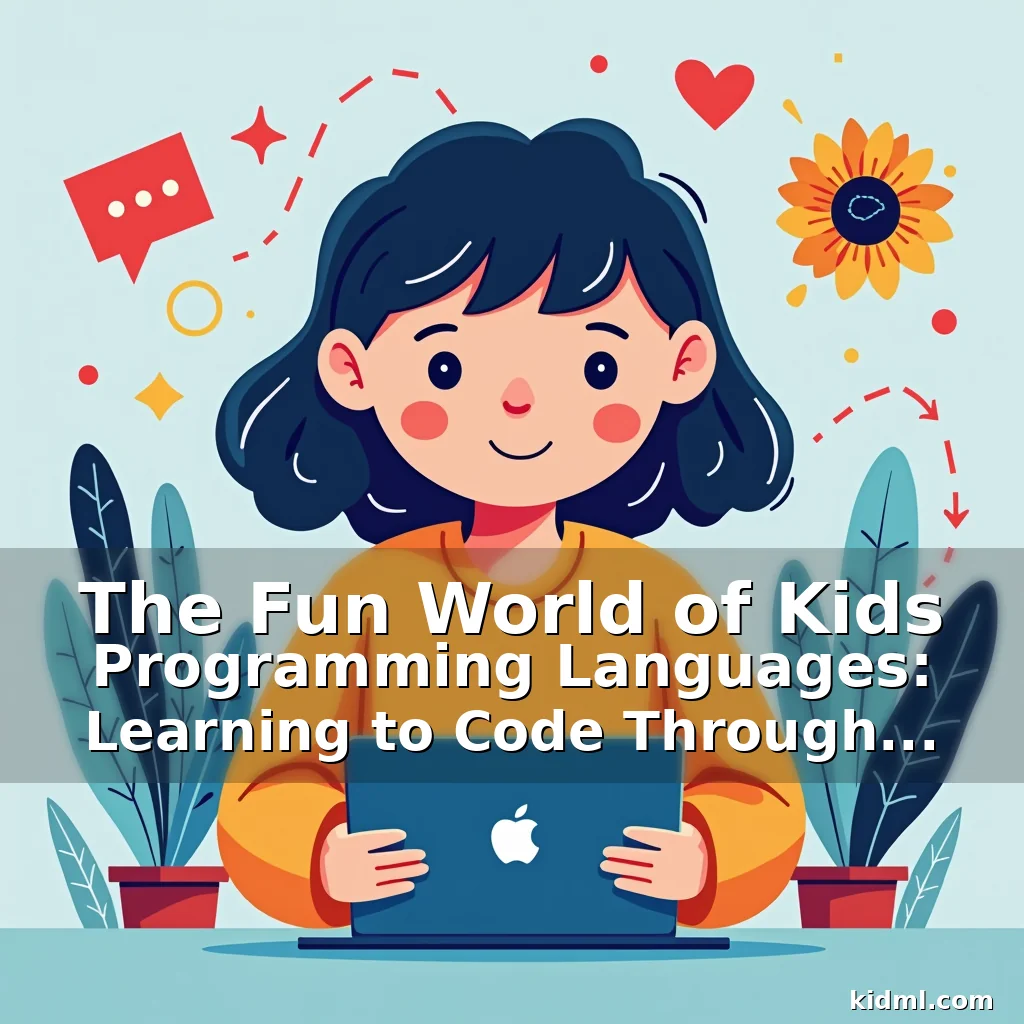
The Fun World of Kids Programming Languages: Learning to Code Through Play
In today’s digital age, learning how to code has become as essential as reading and math for children. The world of kids’ programming languages offers an exciting way for young minds to explore creativity, logic, and problem-solving through play. These specially designed tools make coding accessible and enjoyable for even the youngest learners.
Kids programming languages are specifically crafted to introduce fundamental computer science concepts without overwhelming young students. They use colorful visuals, interactive elements, and simple syntax to teach core skills while keeping engagement high. As technology continues to shape our lives, early exposure to programming empowers children with critical thinking abilities they’ll carry into many aspects of their future.
Why Kids Should Learn Programming Early
Introducing programming at a young age helps develop crucial cognitive abilities that benefit children in various areas of life. When kids learn to code, they’re not just memorizing commands—they’re building logical thinking patterns that help them approach problems systematically. This type of thinking becomes second nature when applied consistently during gameplay and project creation.
Programming also encourages persistence and resilience. Children often encounter challenges when working on coding projects, but these obstacles become opportunities for growth rather than frustrations. Studies show that kids who engage with programming regularly demonstrate improved perseverance and a stronger ability to handle complex tasks later in life.
Moreover, programming teaches kids to break down big problems into smaller, manageable parts—a skill known as decomposition. This method helps children tackle academic subjects more effectively by teaching them to analyze information in structured ways.
- Cognitive Development: Coding enhances memory retention and improves attention spans by requiring continuous mental engagement.
- Logical Thinking: Programming reinforces cause-and-effect relationships, helping children understand sequences and outcomes better.
- Creativity Boost: Kids can express themselves through game design, animations, and storytelling using visual programming interfaces.
- Future Readiness: With increasing demand for tech-savvy professionals across industries, early coding experience gives children a competitive edge.
Parents and educators who encourage early coding experiences are investing in long-term benefits for children’s intellectual development. The skills acquired through programming translate well into other academic disciplines, from mathematics to language arts. By making learning fun and interactive, kids remain motivated and curious about exploring new ideas.
Top Kids Programming Languages to Explore
Choosing the right programming language depends on a child’s interests, developmental stage, and learning goals. Some platforms focus on block-based coding, while others transition gradually into text-based languages. Understanding the different options available helps parents select the best fit for their child’s needs and preferences.
Let’s examine some popular choices among kids’ programming communities worldwide. Each option brings its own set of advantages, tailored toward different types of learners and educational objectives. From playful puzzle games to real-world application scenarios, there’s something suitable for every young coder.
Block-based programming environments provide excellent starting points for beginners. These systems allow users to drag and drop pre-coded blocks representing commands, which simplifies understanding basic programming constructs before moving to full text-based coding. This approach makes learning intuitive and less intimidating for younger audiences.
Scratch: A Gateway to Creative Expression
Scratch is perhaps the most widely used platform for introducing kids to programming fundamentals. Developed by MIT Media Lab, Scratch uses a visually appealing interface where children can create stories, games, and animations by snapping together color-coded blocks. Its simplicity allows complete novices to start creating within minutes.
The platform supports both individual exploration and collaborative projects, encouraging social interaction while developing technical skills. Teachers commonly integrate Scratch into classroom curricula because of its adaptability across various subject matters—from science experiments to music composition.
A key feature of Scratch is its extensive online community. Young programmers can share their creations, receive feedback, and learn from each other’s work. This peer-to-peer sharing fosters motivation and builds confidence as children see tangible results from their efforts.
Schools around the globe utilize Scratch to enhance STEM education initiatives. Many curriculums now include Scratch-based activities that align with national standards for computational thinking and digital literacy. The platform’s flexibility ensures it remains relevant as technology evolves.
Blockly: Building Blocks for Logical Thinking
Blockly, created by Google, shares similarities with Scratch but presents itself in a slightly different form factor. It features customizable block structures that teachers can tailor according to lesson plans. This adaptability makes Blockly particularly useful for integrating coding into existing school programs seamlessly.
Unlike traditional text editors, Blockly maintains a clean workspace free from cluttered syntax rules. Students manipulate graphical blocks representing programming functions, allowing them to experiment freely without worrying about grammatical errors affecting program execution.
Educational institutions appreciate Blockly’s compatibility with various programming languages such as JavaScript and Python. This characteristic enables gradual transitions from block-based learning towards more advanced text-based coding environments as students progress academically.
Blockly’s open-source nature facilitates continuous improvements driven by developer contributions globally. Educators can customize the toolset based on curriculum requirements while benefiting from ongoing enhancements made by the wider programming community.
CodeCombat: Gamified Learning Experience
For those who thrive in game-like environments, CodeCombat offers an innovative approach to teaching programming concepts through adventure-style quests. Players control characters navigating virtual worlds where solving puzzles requires applying actual coding techniques.
This immersive format transforms abstract programming principles into concrete actions players perform to advance through levels. Successful completion rewards users with achievements that reinforce positive reinforcement cycles central to effective learning processes.
CodeCombat integrates several mainstream programming languages including Python, JavaScript, and Java. This diversity caters to varying interests among young coders, ensuring accessibility regardless of preferred language direction.
The platform employs adaptive difficulty settings that adjust dynamically based on user performance metrics. This personalization ensures optimal challenge levels that maintain engagement without causing frustration due to excessive complexity.
Minecraft Education Edition: Building Worlds and Skills Simultaneously
Minecraft Education Edition combines entertainment value with substantial educational potential. While retaining familiar sandbox mechanics from original Minecraft versions, this edition incorporates dedicated coding functionalities enabling players to script behaviors within their creative constructions.
Students can apply foundational programming knowledge directly inside their built environments. Writing scripts modifies object interactions or automates repetitive construction tasks—transforming theoretical lessons into practical applications instantly visible in-game.
The integration of MakeCode editor provides an easy entry point for beginning coders. Visual block system initially guides users before transitioning smoothly into textual scripting modes as proficiency increases naturally over time.
Teachers find Minecraft Education Edition especially beneficial for cross-disciplinary instruction spanning STEM fields alongside humanities studies. Historical reenactments, environmental simulations—all become feasible through strategic coding implementations within the game space.
Fostering Creativity Through Interactive Projects
One of the greatest advantages of learning programming via specialized platforms is the opportunity to create personalized projects reflecting individual interests. Whether designing video games, composing music tracks, or animating stories, kids have numerous avenues expressing themselves artistically through code.
These interactive projects serve dual purposes beyond mere recreation; they function simultaneously as vehicles for reinforcing conceptual understanding. For instance, constructing a side-scrolling platformer involves implementing gravity physics calculations—an exercise strengthening mathematical comprehension alongside programming skills.
Project-based learning methodology proves highly effective in sustaining student interest. By seeing direct consequences resulting from their input codes, learners grasp abstract concepts concretely, enhancing overall retention rates significantly compared to passive instruction methods alone.
Encouraging experimentation promotes innovation mindset development. Mistakes become part of iterative improvement cycles instead of failures needing avoidance. This perspective nurtures resilient attitudes vital for lifelong success in any field endeavor undertaken later.
Support Systems for Young Programmers
No child should ever feel isolated while pursuing technological passions. Fortunately, abundant resources exist supporting families aiming to cultivate budding programmers successfully. Community involvement plays instrumental roles shaping positive learning journeys characterized by mutual encouragement and shared discovery.
Local libraries frequently host coding workshops featuring guided tutorials under expert supervision. These sessions offer safe spaces fostering curiosity while establishing connections among peers facing similar learning curves together.
Online forums dedicated exclusively to youth programmers facilitate global collaboration possibilities otherwise unattainable locally constrained geographies. Virtual participation allows exchange of ideas transcending cultural boundaries enriching collective knowledge base continuously expanding organically.
Parental guidance remains equally significant despite availability of autonomous learning materials. Active engagement demonstrates commitment valuing child’s aspirations, cultivating intrinsic motivation essential for sustained dedication required mastering technical disciplines progressively demanding higher order thinking capabilities.
Preparing for Future Tech Careers
While not all children will pursue careers involving software engineering explicitly, exposure to computational thinking equips them comprehensively regardless chosen pathways ahead. Digital literacy competencies gained through early coding experiences prove transferable across diverse professional domains increasingly reliant upon technological solutions.
Employment sectors ranging from healthcare management to artistic production incorporate data analysis components necessitating fundamental understanding of algorithmic approaches. Early introduction lays groundwork facilitating seamless adaptation encounters inevitably encountered professionally later stages of life.
Entrepreneurial ventures benefit immensely from computing acumen. Recognizing market trends through analytical lenses developed via coding practice provides distinct advantages identifying viable business opportunities overlooked by non-tech savvy competitors.
Continual learning remains paramount amidst rapidly evolving technological landscapes. Platforms offering progressive difficulty scales ensure readiness handling emerging developments confidently maintaining relevance within dynamic industry contexts perpetually shifting forward.
Bridging Cultural Divides Through Global Collaboration
Technology democratizes access enabling international cooperation previously unimaginable constraints imposed by physical distances separating individuals. Coding communities foster inclusive environments welcoming participants irrespective geographical origins promoting unity through common pursuit knowledge advancement.
Youth programmers connect virtually exchanging perspectives broadening worldview appreciating varied viewpoints enriching collective intelligence reservoirs continually replenished daily contributions made globally distributed network members actively engaged constantly.
Diverse backgrounds contribute uniquely valuable insights influencing directions taken collectively shaped decisions impacting entire ecosystems sustainably. Such collaborative spirit embodies essence modern innovation thriving interdependence rather competition inherently present human endeavors universally applicable everywhere planet wide.
Shared accomplishments celebrate milestones achieved jointly reinforcing bonds formed through mutual respect earned recognizing strengths brought forth respectively enhancing overall quality outputs produced collaboratively rather individually accomplished singularly.
Ensuring Safe Online Experiences
As children immerse themselves deeper into digital realms, safeguarding their wellbeing becomes imperative priority absolute necessity protecting vulnerable populations against potential threats lurking online spaces seemingly benign appearances misleadingly inviting dangers concealed beneath surface level attractions.
Parental controls constitute first line defense monitoring activity tracking progress ensuring appropriate content filtered out harmful material potentially damaging developmental trajectories negatively affected undue exposure inappropriate themes unsuitable ages consuming immature sensibilities lacking maturity discernment distinguishing acceptable from unacceptable behaviors exhibited digitally.
Secure login protocols prevent unauthorized access protecting private information susceptible exploitation malicious actors seeking vulnerabilities compromising confidentiality integrity authenticity data stored cloud servers third-party services hosting sensitive records entrusted securely maintained properly encrypted protected adequately shielded robust security measures implemented proactively preventing breaches occurring inadvertently neglect oversight responsibilities assigned accordingly.
Education regarding responsible internet usage cultivates awareness instilling ethical considerations guiding behavior respecting privacy rights acknowledging limitations inherent digital communications emphasizing importance consent before sharing anything publicly displayed exposed broadly reachable audience potentially reaching unintended recipients unaware context originating messages transmitted carelessly disregarding repercussions might ensue misinterpretations leading misunderstandings escalating conflicts unnecessarily avoidable otherwise.
Measuring Progress and Setting Goals
Establishing clear benchmarks assists measuring achievement levels determining whether current strategies yield desired results warranting adjustments optimizing effectiveness maximizing return investments devoted time energy resources allocated towards acquiring new skills refining existing ones.
Tracking milestones achieved provides tangible evidence demonstrating growth validating effort confirming that persistent attempts lead successful outcomes reinforcing belief capacity overcoming difficulties confronting obstacles head-on facing challenges squarely addressing issues directly rather avoiding them.
Setting realistic expectations prevents discouragement arising from comparing oneself unfairly others possessing different circumstances experiencing varied conditions influencing progress speeds disparities normal occurrences natural variations attributable multitude factors contributing complexity human development process inherently nonlinear unpredictable pattern fluctuating intensity depending situational variables.
Regular assessments identify areas needing improvement focusing enhancement efforts strategically allocating attention where needed most ensuring balanced development avoiding imbalances caused prioritization mistakes overlooking crucial aspects mistakenly neglected erroneously dismissed insignificant perceived trivialities actually playing pivotal roles overall competence mastery discipline pursued diligently consistently practiced repeatedly reinforced habitually cultivated enduring expertise attained eventually.
Conclusion
Exploring kids programming languages opens up countless opportunities for young learners to discover their passion for technology in a supportive environment. These specialized platforms combine education with entertainment, making the journey of becoming a programmer both rewarding and enjoyable.
By choosing the right tools and staying committed to regular practice, children can build strong foundations that will support their future endeavors in STEM fields or any career path they choose. Encouraging curiosity, patience, and creativity through programming sets the stage for lifelong learning and innovation.

news is a contributor at KidML. We are committed to providing well-researched, accurate, and valuable content to our readers.
You May Also Like
About news
Passionate about making AI and machine learning accessible to everyone, especially young learners and beginners.