
Table of Contents
Navigate through this article's sections
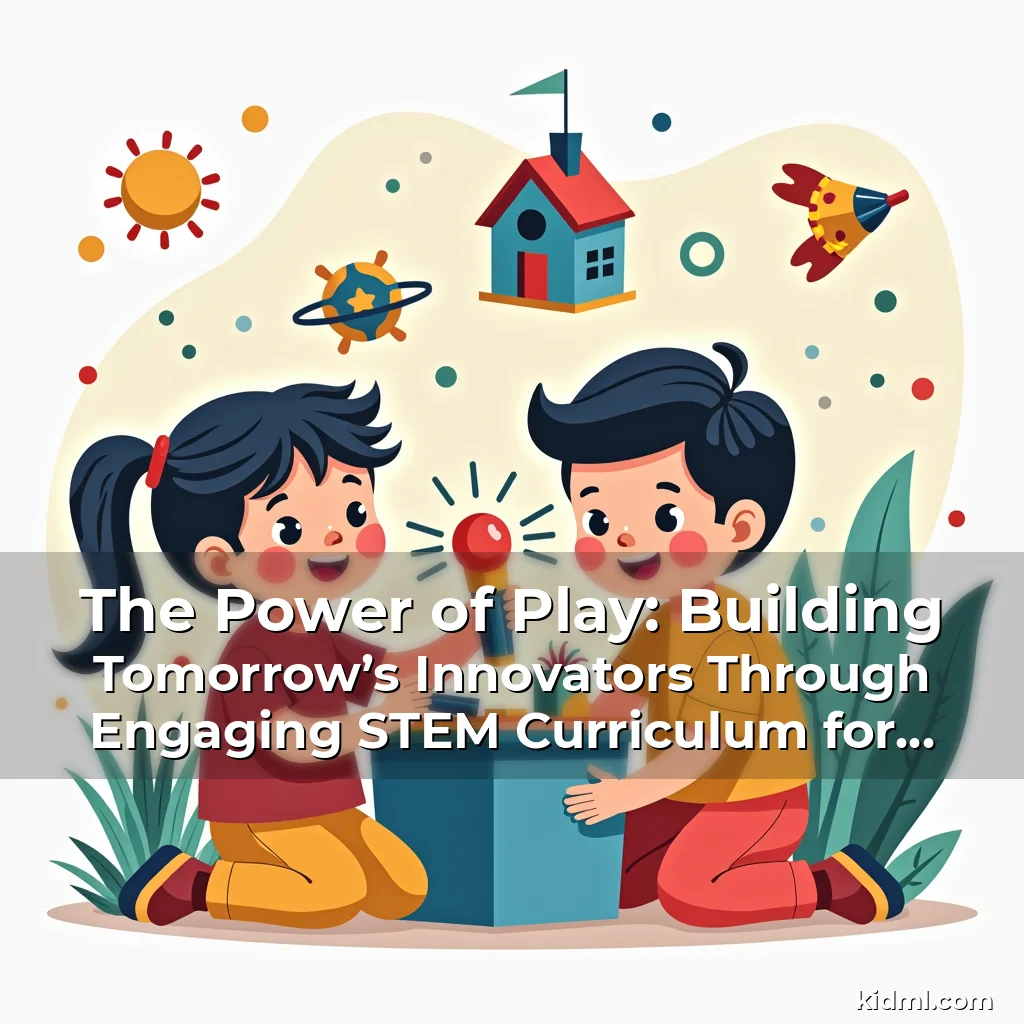
The Power of Play: Building Tomorrow’s Innovators Through Engaging STEM Curriculum for Kids
In an ever-evolving world driven by technology, innovation, and discovery, equipping children with foundational skills in science, technology, engineering, and mathematics is not just beneficial—it’s essential. A well-designed STEM curriculum for kids can spark curiosity, nurture creativity, and lay the groundwork for future problem-solvers, engineers, scientists, and entrepreneurs.
This guide explores how interactive learning experiences, hands-on experimentation, and real-world applications are transforming education through modern STEM curricula tailored specifically for young learners from preschool through middle school.
Why Early Exposure to STEM Matters for Young Minds
Introducing STEM concepts at an early age helps build cognitive flexibility, critical thinking abilities, and logical reasoning skills that benefit students across all academic disciplines. Research shows that exposure to scientific inquiry during formative years significantly increases long-term engagement with these subjects.
Young brains naturally thrive when given opportunities to explore, question, and experiment. By integrating STEM principles into everyday play activities, educators create environments where children develop natural curiosity while building fundamental knowledge foundations.
Early exposure also helps dismantle stereotypes about who can excel in STEM fields. When girls see themselves represented in robotics teams or coding clubs alongside their peers, they’re far more likely to pursue these interests later in life.
Studies indicate that children who engage with STEM concepts before formal schooling begin show greater confidence in tackling complex problems compared to those introduced to these topics later.
Fundamental Components of an Effective STEM Curriculum for Kids
A successful STEM program combines hands-on exploration with theoretical understanding. The best curricula balance structured lessons with open-ended investigations that encourage creative problem-solving approaches.
Quality programs emphasize cross-disciplinary connections between math, science, and engineering concepts. For example, designing a simple bridge might involve measurements (math), material properties (science), and structural integrity (engineering).
Active participation through experiments, projects, and design challenges keeps students engaged and motivated. These experiential learning methods make abstract concepts tangible and memorable.
- Hands-on experiments: Allow direct interaction with materials and phenomena, reinforcing conceptual understanding through practical application.
- Cross-curricular integration: Helps students see how different STEM fields interconnect and apply together in real-life scenarios.
- Real-world relevance: Connecting classroom concepts to current events or technological innovations makes learning meaningful and impactful.
Educational standards ensure consistency while allowing room for creativity and adaptation based on student needs and local contexts. This dual approach supports both uniformity in core competencies and individualized growth pathways.
Interactive Learning Strategies That Make STEM Come Alive
Dynamic teaching techniques transform passive learning into active discovery. Gamification elements such as puzzles, simulations, and digital platforms turn complex ideas into enjoyable challenges.
Project-based learning encourages deep immersion in topics through extended investigation periods. Students might spend weeks designing solutions to environmental issues or creating prototypes for new inventions.
Collaborative group work develops social skills along with technical expertise. Working together on engineering tasks teaches communication, teamwork, and conflict resolution strategies crucial for future careers.
Digital tools provide access to virtual labs, coding exercises, and data analysis software that enhance traditional classroom instruction with modern capabilities.
Age-Appropriate Approaches to Teaching STEM Concepts
Curriculum designers tailor content to match developmental stages, ensuring concepts align with what children can realistically understand and apply at each educational level.
Preschoolers learn basic cause-and-effect relationships through sorting objects by shape, color, or texture—early steps toward classification and measurement skills used in advanced math and science courses.
Elementary school introduces simple machines, basic coding logic, and foundational physics through playful activities like building marble runs or programming robots using visual block languages.
Middle school delves deeper into specialized areas with focused units on biology, chemistry, computer science fundamentals, and applied engineering projects requiring more sophisticated problem-solving strategies.
Bridging the Gap Between Classroom Theory and Real-World Application
Modern STEM programs emphasize connecting academic content to practical situations students encounter daily. Field trips to science museums, nature reserves, or tech companies bring textbook knowledge to life.
Guest speakers from various STEM professions share personal stories and career paths, demystifying potential futures available to young learners passionate about these fields.
Hands-on workshops let students test theories against reality, whether experimenting with renewable energy sources or prototyping eco-friendly products designed for specific purposes.
Service-learning components allow youth to use their newfound skills for community improvement projects, fostering civic responsibility alongside technical proficiency.
Supporting Inclusive Access to Quality STEM Education
Ensuring equitable access requires intentional efforts to overcome socioeconomic barriers that limit some students’ opportunities in STEM fields. Schools must invest in resources that support diverse learning needs effectively.
Scholarships, grants, and subsidized equipment help families afford necessary supplies without financial strain. Community partnerships enable schools to offer after-school programs enriched with expert mentorship and state-of-the-art facilities.
Linguistic accessibility measures include translated materials and bilingual instructors so non-native English speakers fully participate in discussions and activities relevant to their cultural backgrounds.
Adaptive technologies assist students with disabilities by providing alternative ways to interact with digital content, conduct experiments safely, and demonstrate comprehension through varied assessment formats.
Measuring Success in STEM Education for Children
Assessment strategies go beyond standardized tests to capture genuine understanding and enthusiasm for STEM subjects. Portfolios showcasing completed projects serve as powerful indicators of progress over time.
Formative assessments through observation checklists track development in key skill areas such as hypothesis formation, experimental design, and data interpretation techniques.
Student self-evaluations promote metacognition by encouraging reflection on learning journeys and identifying strengths and areas needing further refinement.
Parental involvement metrics gauge home environment support levels influencing continued interest and engagement outside formal classroom settings.
Preparing Future Leaders With a Strong STEM Foundation
An effective STEM curriculum prepares children not only academically but socially and emotionally as well. It cultivates resilience through trial-and-error processes inherent in scientific discovery.
Students gain confidence in expressing opinions respectfully within collaborative groups, a vital soft skill applicable across all professional domains encountered later in life.
Problem-solving frameworks taught in STEM classrooms become transferable assets useful in navigating personal challenges as well as global crises demanding innovative responses.
These combined benefits position today’s youth to lead tomorrow’s advancements confidently, creatively, and compassionately in whatever paths they choose professionally.
Conclusion
By embracing dynamic, inclusive, and age-appropriate STEM curricula, we empower children to think critically, solve complex problems, and contribute meaningfully to society’s ongoing evolution.
Investing in quality STEM education now ensures our youngest generation will be equipped with the skills necessary to face—and shape—the future successfully.
“`

news is a contributor at KidML. We are committed to providing well-researched, accurate, and valuable content to our readers.
You May Also Like

About news
Passionate about making AI and machine learning accessible to everyone, especially young learners and beginners.