
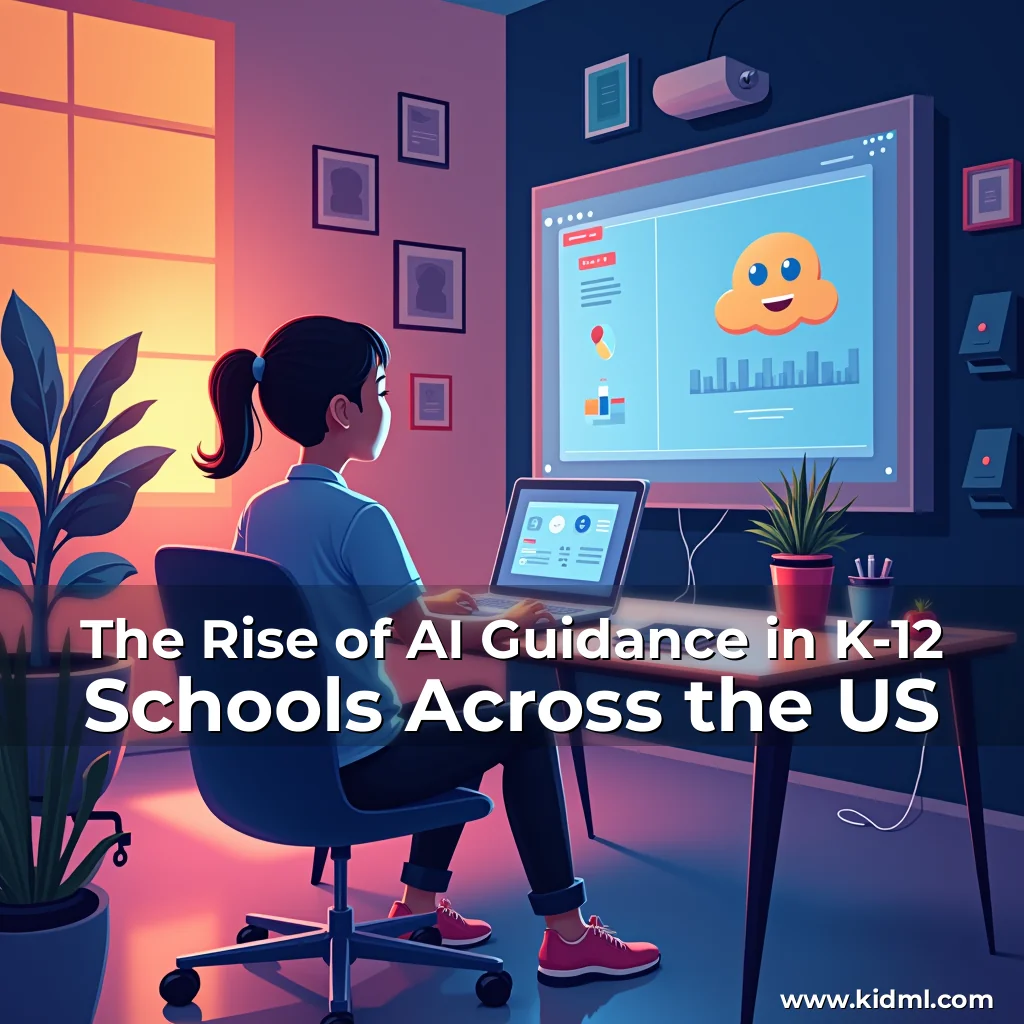
States Take Action to Ensure Safe and Responsible Use of Artificial Intelligence
In recent years, there has been a growing trend towards the use of artificial intelligence (AI) in K-12 schools across the US. As AI technology continues to advance at a rapid pace, educators and policymakers are working to ensure that its use is safe and responsible. In response to this need, agencies in at least 28 states and the District of Columbia have issued guidance on the use of AI in K-12 schools. *
- AI for Education, an advocacy group, has reported that more than half of the states have created school policies to define artificial intelligence, develop best practices for using AI systems, and more.
- These policies aim to address concerns around academic integrity, responsible use, and the potential benefits and risks of AI in the classroom.
- Despite efforts to loosen federal and state AI rules, teachers and students need state-level guidance to navigate the fast-moving technology.
Addressing Concerns Around Academic Integrity
Amanda Bickerstaff, CEO and co-founder of AI for Education, emphasizes the importance of addressing concerns around academic integrity. “What most people think about when it comes to AI adoption in the schools is academic integrity,” she said. “One of the biggest concerns that we’ve seen — and one of the reasons why there’s been a push towards AI guidance, both at the district and state level — is to provide some safety guidelines around responsible use and to create opportunities for people to know what is appropriate.”
State-Level Guidance: A Critical Gap Filler
North Carolina, which became one of the first states to issue AI guidance for schools, set out to study and define generative artificial intelligence for potential uses in the classroom. The policy also includes resources for students and teachers interested in learning how to interact with AI models successfully. *
- Other states, such as Georgia, Maine, Missouri, Nevada, and New Mexico, have also released guidelines for AI in schools, emphasizing the importance of ethical considerations.
Addressing Ethical Considerations
In addition to classroom guidance, some states emphasize ethical considerations for certain AI models. Following Georgia’s initial framework in January, the state shared additional guidance in June outlining ethical principles educators should consider before adopting the technology.
A Critical Gap in AI Guidance
Maddy Dwyer, a policy analyst for the Equity in Civic Technology team at the Center for Democracy & Technology, notes that while most state AI guidance for schools focuses on the potential benefits, risks, and need for human oversight, many of the frameworks are missing out on critical AI topics, such as community engagement and deepfakes, or manipulated photos and videos. *
| Key AI topics missing from state guidance | Community engagement | Deepfakes, or manipulated photos and videos |
| Why these topics are important | Ensuring that AI systems are transparent and accountable to the community | Preventing the spread of misinformation and fake news |
Conclusion
In conclusion, the use of AI in K-12 schools is a rapidly evolving field that requires careful consideration and guidance. As states continue to issue guidance on the use of AI in schools, it is essential that these frameworks address the critical gaps in AI topics, such as community engagement and deepfakes. By working together, educators, policymakers, and industry stakeholders can ensure that the use of AI in schools serves the needs of students and enhances their educational experiences. This story first published in Stateline. Read the original here.

news is a contributor at KidML. We are committed to providing well-researched, accurate, and valuable content to our readers.
You May Also Like


About news
Passionate about making AI and machine learning accessible to everyone, especially young learners and beginners.
Related Articles

The AI Revolution: Exploring Opportunities and Challenges
The rapid evolution of Artificial Intelligence (AI) has brought the world into a new era…
Read More →
ICYMI : National AI Literacy Day Mobilizes Thousands Nationwide to Explore What is AI
The Importance of Community Engagement in Education Fostering a Culture of Collaboration Community engagement is…
Read More →
Maharashtra minister addresses AI concerns assures policy will complement not replace education
The policy will focus on the development of AI in various sectors, including education, healthcare,…
Read More →