
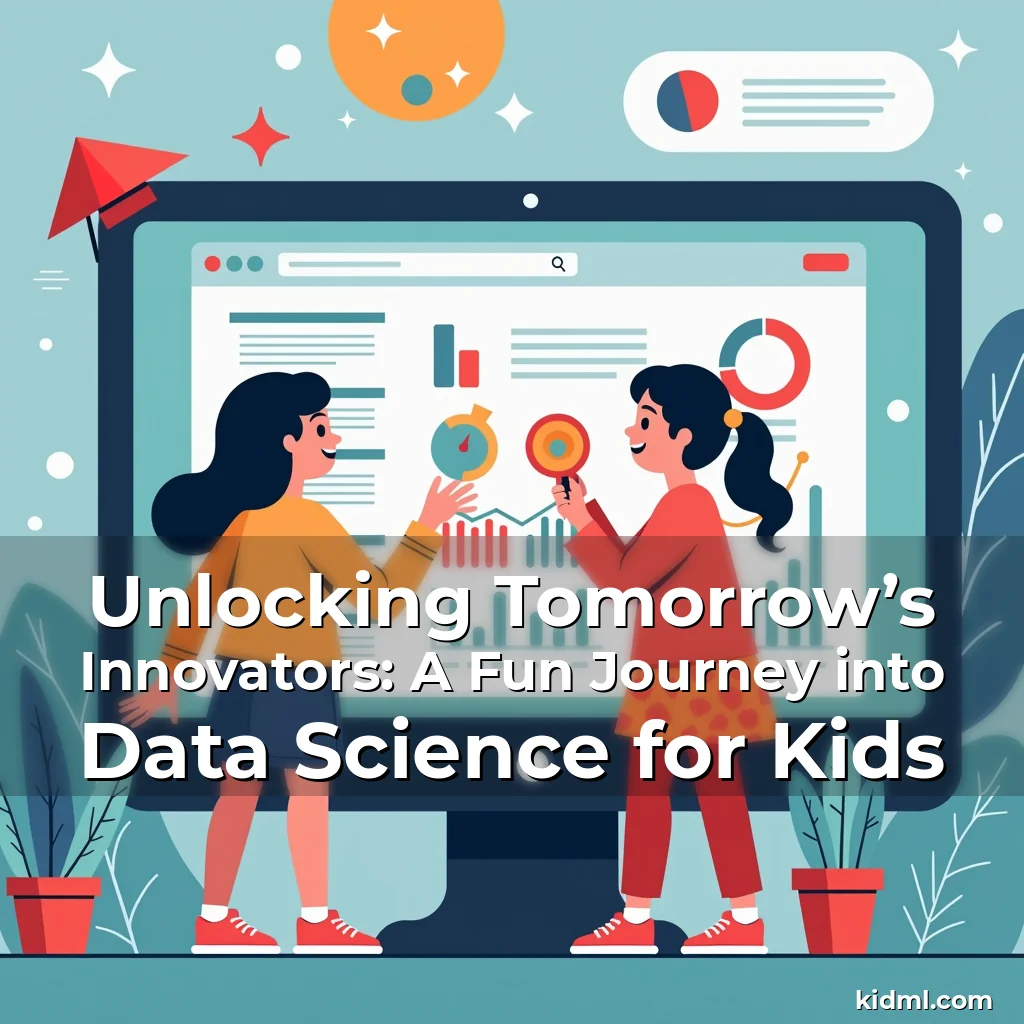
Unlocking Tomorrow’s Innovators: A Fun Journey into Data Science for Kids
Data science isn’t just for adults in lab coats—it’s a superpower waiting to be unlocked by curious minds everywhere! With its blend of puzzles, patterns, and problem-solving, data science offers kids a creative way to understand the world around them.
From sorting candy colors to predicting game outcomes, data science teaches kids to think critically and see numbers as storytellers. It’s never too early to spark this kind of wonder!
The Magic Behind Data Science: Making Numbers Come Alive
Data science involves exploring information to find hidden clues and answer questions. For kids, this means turning everyday experiences into adventures filled with discovery.
Imagine your child collecting data on which toy gets played with most often or tracking rainfall during summer vacation. These simple tasks become exciting opportunities to learn about trends and predictions.
- Collecting Information: Kids gather facts through observations, experiments, or digital tools. Examples include recording temperatures, tallying favorite snacks, or noting traffic patterns near school.
- Finding Patterns: By organizing collected data visually—like charts or graphs—they begin recognizing connections between variables, such as linking sunny days to higher ice cream sales.
Why Data Science Matters for Young Minds Today
In our tech-driven world, data shapes decisions in everything from healthcare to entertainment. Teaching kids to interpret data equips them to navigate this landscape confidently.
Data science also nurtures crucial skills like logical thinking, attention to detail, and perseverance—all vital for future careers in STEM fields or beyond.
Real-World Impact: How Early Learners Can Change the Future
A study by the National Center for Education Statistics found that students exposed to computational thinking before high school perform better in math and science later. This applies equally to data science fundamentals.
Kids who engage with data science early develop a mindset for tackling global issues—from climate change to urban planning—by analyzing real-time datasets and proposing solutions.
Toys, Tools & Tech: Learning Data Science Through Play
Interactive toys and apps transform abstract concepts into hands-on fun. Platforms like ScratchJr allow kids to create simple programs while learning to manipulate data sets visually.
Educational kits such as LEGO Mindstorms combine physical building blocks with coding exercises that require interpreting sensor inputs—a perfect bridge between play and data exploration.
Designing Projects That Spark Curiosity
Encouraging open-ended projects lets kids define their own research questions. Whether comparing pet preferences across neighborhoods or timing race car laps, personal investment drives deeper learning.
Parents and teachers can facilitate by providing templates for spreadsheets, guiding graph creation, or helping identify reliable sources for comparative analysis.
Safety First: Navigating Digital Spaces Responsibly
While many online resources exist for teaching data science basics, it’s essential to prioritize privacy settings and parental controls when accessing external databases or collaborative platforms.
Teach children to question where data comes from and consider ethical implications—for example, discussing whether sharing survey results online respects participants’ confidentiality.
Coding Skills: The Building Blocks of Data Analysis
Basic programming languages like Python offer powerful libraries (e.g., Matplotlib) that enable kids to visualize data once they grasp fundamental syntax. However, simpler alternatives exist for beginners.
Tools such as Google’s Teachable Machine let users train AI models without writing code, focusing instead on categorizing images or sounds—an excellent stepping stone toward algorithmic thinking.
Beyond Screen Time: Offline Data Exploration Activities
Not every lesson needs a computer screen. Board games involving probability calculations, scavenger hunts requiring pattern recognition, or family trivia nights centered around historical trends all qualify as informal data science education.
Creating frequency tables from coin tosses during dinner time or measuring plant growth weekly provides tangible examples of statistical principles in action.
Teamwork Makes the Dream Work: Collaborative Data Challenges
Group projects foster communication skills alongside analytical abilities. Assign teams to analyze local environmental metrics—air quality readings, recycling rates—and present findings creatively via posters or skits.
Competitions like Kaggle’s Junior Division challenge teens worldwide to solve real-world problems using publicly available datasets, promoting both individual initiative and collective effort.
Tackling Common Obstacles: Keeping Kids Engaged
Sometimes complexity feels overwhelming; simplifying tasks gradually helps maintain motivation. Focus initially on qualitative data (color counts, opinion polls) before transitioning to quantitative measurements.
Use relatable analogies: compare data cleaning to tidying up a messy room, or liken hypothesis testing to playing detective searching for clues in a mystery novel.
Measuring Progress: Tracking Growth in Data Literacy
Assessments shouldn’t feel like tests but rather celebrations of progress. Maintain portfolios showcasing evolving projects, from initial sketches of bar graphs to final presentations using multimedia formats.
Set achievable milestones, such as completing three independent analyses or presenting findings to friends/family, reinforcing confidence through measurable accomplishments.
Community Connections: Finding Support Networks
Joining clubs focused on youth innovation exposes kids to mentors passionate about STEM topics. Local libraries often host free workshops featuring guest speakers working in related industries.
Online forums provide access to international peers exchanging ideas, troubleshooting issues together, and collaborating remotely on shared goals through video conferencing tools.
Looking Ahead: Preparing for Future Opportunities
Early exposure lays groundwork not only for potential careers in data analytics, machine learning engineering, or scientific research but also enhances adaptability across various disciplines.
As artificial intelligence continues reshaping society, fluency in data interpretation becomes increasingly valuable—not just professionally but personally as well, empowering informed decision-making throughout life.
Conclusion
Data science opens doors to endless possibilities when introduced thoughtfully to young learners. It blends creativity with logic, transforming passive observers into active creators capable of shaping tomorrow’s innovations.
Start today by finding one simple activity that sparks joy in exploring information together. Who knows? You may be nurturing the next generation of scientists, engineers, or entrepreneurs right before your eyes!

news is a contributor at KidML. We are committed to providing well-researched, accurate, and valuable content to our readers.
You May Also Like
About news
Passionate about making AI and machine learning accessible to everyone, especially young learners and beginners.
Related Articles
The Magical World of Data Science for Kids: Unlocking Secrets Through Numbers and Stories
The Magical World of Data Science for Kids: Unlocking Secrets Through Numbers and Stories In…
Read More →