The First ML Project Workbook
The KidML workbook for a first machine learning project: eight missions from a question to a model you have tested honestly
The calculators on this site each answer one question about a machine learning project: how big the data is, which kind of model fits, how many parameters it has, whether it fits in memory, how long it trains, and how it scores. None of them puts those in order, and a single accuracy score can mislead: on the worked spam filter, a model that never finds a spam email still scores 80%. The First ML Project Workbook puts them in order. Eight missions take a learner from a question a computer can learn, through planning and splitting the data, labeling and checking it, choosing and sizing a model, checking it will run, to testing it honestly against a lazy model, and sharing it on a one-page poster with a fairness check. For learners about 12 and up, or younger with a grown-up; works with free no-code tools or a first Python course. Not a coding course. Includes a guide for grown-ups on keeping personal data out of projects. With your purchase comes a personalised sheet setting your own model against your lazy model.
Look inside
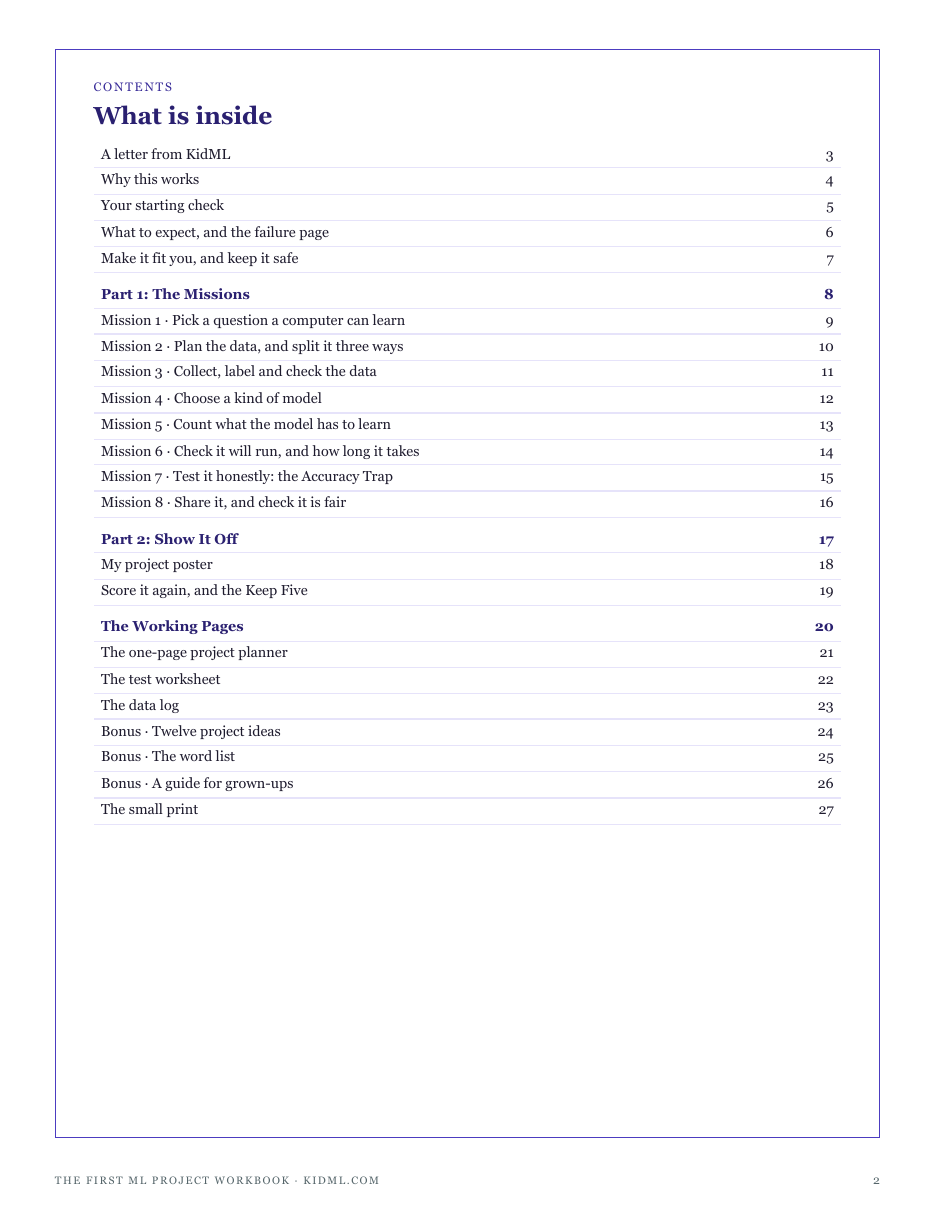
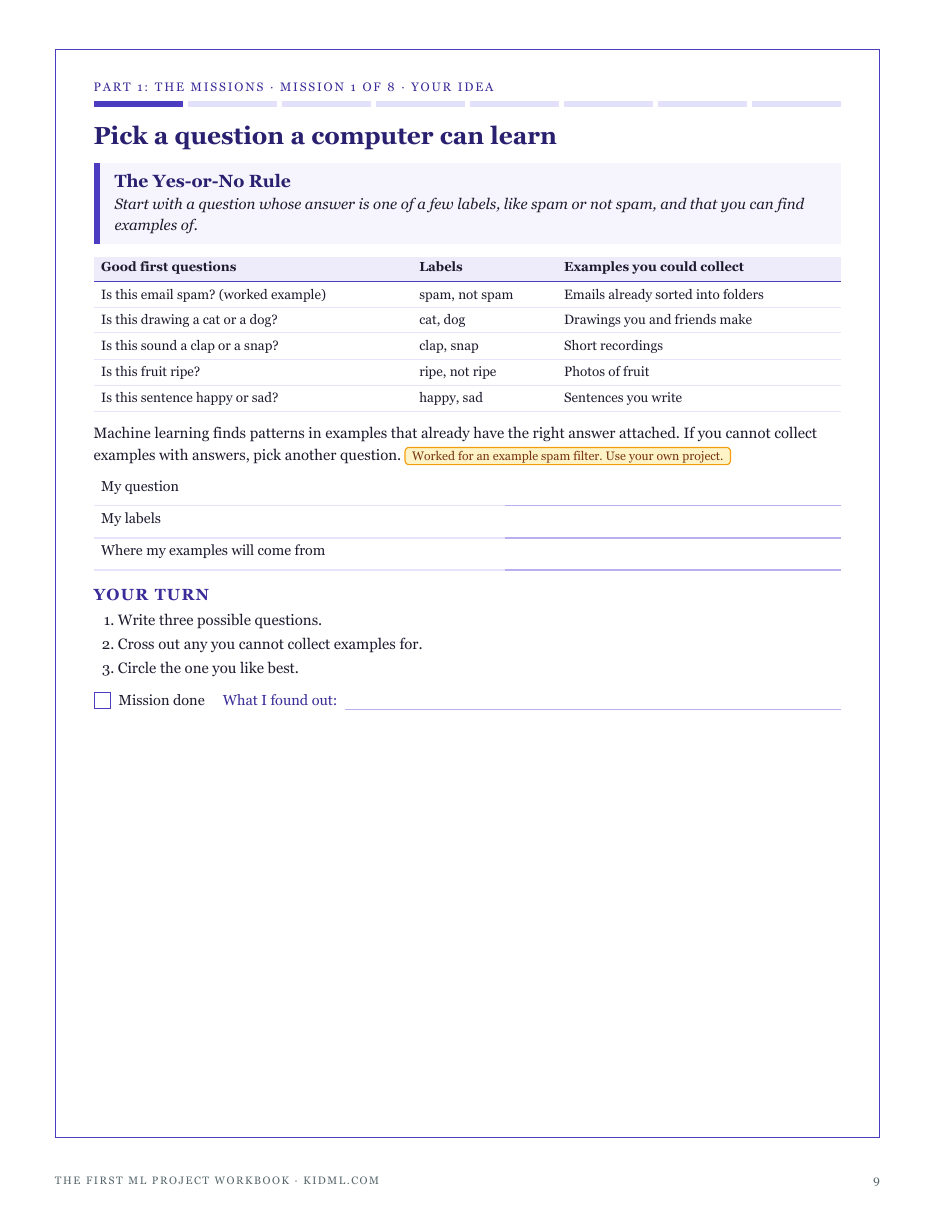
Two full pages from the workbook, exactly as printed. Click either to read it at full size before you decide.
What is in it
- Pick a question a computer can learn
- Plan and split the data
- Collect, label and check the data
- Choose a kind of model
- Count the parameters
- Check it will run, and how long it takes
- Test it honestly: the Accuracy Trap
- Share it, and check it is fair
- A project poster, planner, test worksheet and data log
- Bonuses: twelve project ideas, a word list and a guide for grown-ups
- A personalised sheet: your model against the lazy model
- ✓ 27 printable pages
- ✓ 11 sections, worksheets and templates
- ✓ A second PDF worked out from the numbers you enter
- ✓ No account needed, just an email address
- ✓ Instant download; link valid 7 days
Price includes any taxes. Sold by GrabURL, who handle checkout and support. The charge appears on your statement as GrabURL.
The workbook complements the free Model Accuracy Predictor. It scores a model; the workbook takes a first project from a question to a score you can trust.